
If you live in a cold climate, you already know what winter does to a garage floor. Snow melts off your vehicle, road salt drips onto the surface, and moisture lingers for hours—or even days. Over time, bare concrete begins to crack, stain, and deteriorate.
So the big question is:
Can garage epoxy flooring truly handle salt, snow, and moisture in cold climates?
At Epoxy Pros of New England, we install epoxy garage floors across Maine and New Hampshire—areas that experience harsh winters year after year. The short answer is yes—when installed correctly, epoxy garage flooring is specifically designed to withstand winter conditions.
Let’s break down why.
The Problem With Bare Concrete in Winter
Concrete is porous. That means it absorbs water, salt, and chemicals. In cold climates, this leads to:
- Freeze–thaw expansion
- Surface cracking
- Spalling (flaking and pitting)
- Permanent salt stains
- Dusting and surface breakdown
When water seeps into concrete and freezes, it expands. Repeated freeze–thaw cycles gradually weaken the slab. Add road salt into the mix, and the deterioration accelerates.
This is why many homeowners in cold regions see their garage floors degrade after only a few winters.
How Epoxy Garage Flooring Protects Against Salt
One of the biggest advantages of epoxy garage flooring is that it creates a non-porous, sealed surface. Unlike bare concrete, epoxy does not absorb water or road salt.
When salt-laden snow melts off your vehicle:
- Moisture stays on the surface
- Salt cannot penetrate the slab
- Cleanup becomes simple
Instead of soaking in and damaging the concrete, winter contaminants can be swept or mopped away.
This moisture barrier is especially important in New England and other northern climates.
Can Epoxy Handle Freeze–Thaw Cycles?
Yes—but proper preparation is critical.
Epoxy flooring bonds directly to the concrete slab. When installed over properly prepared and structurally sound concrete, it acts as a protective shield.
Because epoxy prevents moisture from entering the slab, it significantly reduces freeze–thaw damage. Without water penetration, there’s less internal expansion during freezing temperatures.
However, installation must be done correctly. Surface grinding, crack repair, and moisture testing ensure strong adhesion and long-term durability.
What About Snow and Standing Water?
In winter, garages often experience pooled water from melting snow. Epoxy flooring handles this well because:
- It is water-resistant
- It prevents moisture absorption
- It resists staining
- It dries easily
Many homeowners are surprised at how much easier it is to maintain an epoxy garage floor during winter months compared to bare concrete.
With proper drainage and occasional cleaning, water does not compromise the coating.
Slip Resistance in Cold Climates
A common concern is whether epoxy becomes slippery when wet. The answer depends on the system used.
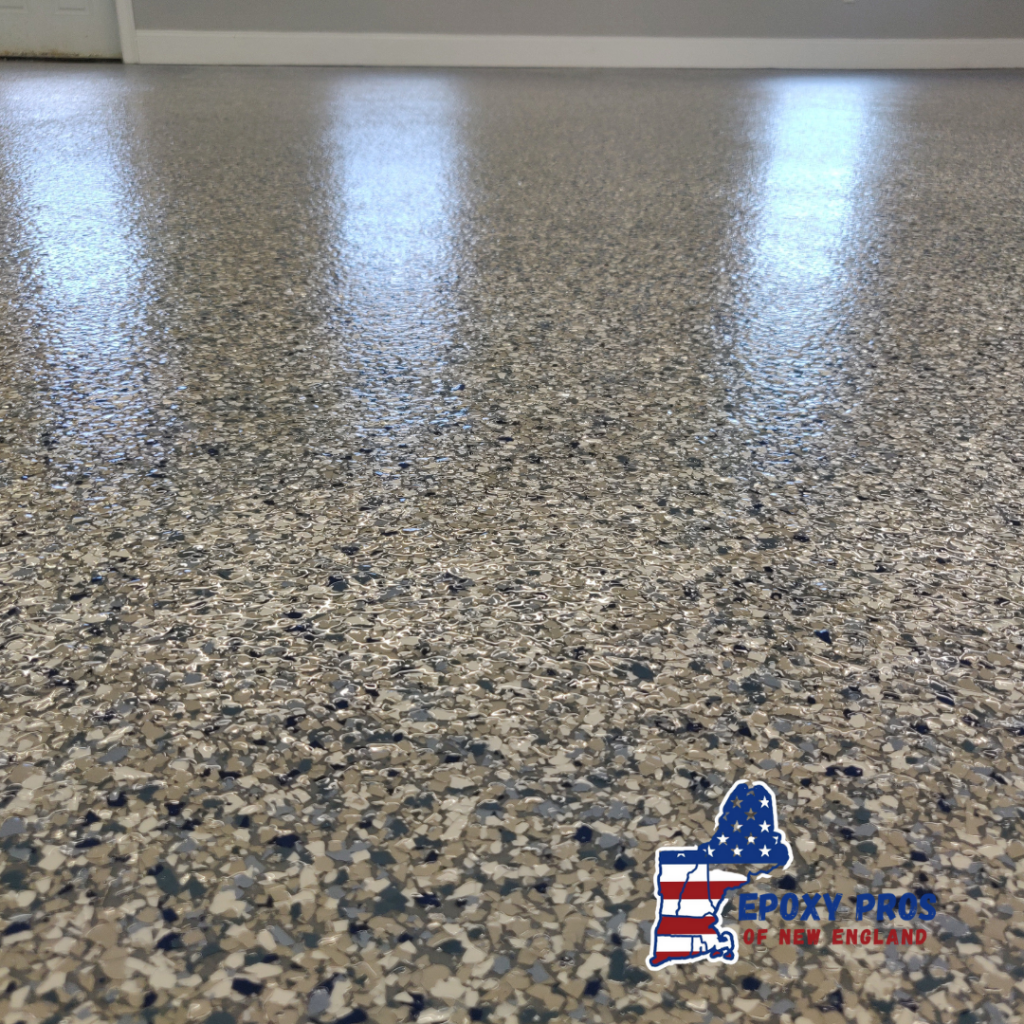
Full broadcast epoxy flake flooring systems add texture to the surface. This improves traction even when moisture is present.
Slip-resistant additives can also be incorporated into the topcoat for added safety during icy conditions.
In snowy climates, textured epoxy flake flooring is often preferred for garages.
Does Salt Damage Epoxy Over Time?
High-quality epoxy and polyaspartic coatings are chemical-resistant. Road salt, de-icing chemicals, and automotive fluids do not break down properly installed systems.
While surface residue should still be cleaned periodically, salt does not penetrate or erode epoxy like it does concrete.
This chemical resistance is one of the reasons epoxy flooring lasts 10–20+ years in harsh environments.
Temperature Considerations During Installation
Cold climates don’t negatively affect epoxy performance once cured—but temperature matters during installation.
Professional installers ensure:
- Concrete temperature is within proper range
- Moisture levels are tested
- Materials are adjusted for seasonal conditions
Installing epoxy in improper temperatures can lead to curing issues. That’s why professional expertise is essential in northern regions.
Long-Term Performance in Cold Weather
When professionally installed, epoxy garage flooring:
- Protects against salt penetration
- Reduces freeze–thaw cracking
- Resists water damage
- Maintains structural integrity
- Requires minimal winter maintenance
Compared to painted concrete—which often peels after exposure to snow and salt—epoxy offers significantly better long-term performance.
Maintenance Tips for Winter Durability
Even though epoxy resists salt and moisture, simple maintenance extends its lifespan:
- Sweep sand and debris regularly
- Mop up excess salt residue
- Avoid metal shovels scraping the surface
- Inspect for cracks annually
Routine care ensures the protective topcoat remains intact year after year.
Final Answer: Can Epoxy Handle Cold Climates?
Yes—garage epoxy flooring is specifically suited for cold climates when installed properly. It provides superior resistance to salt, snow, moisture, and freeze–thaw cycles compared to bare or painted concrete.
For homeowners in northern states, epoxy garage flooring is one of the most effective long-term solutions for winter protection.
Upgrade Your Garage for Winter Protection
If you’re dealing with salt-damaged concrete or want to prevent winter deterioration, Epoxy Pros of New England installs high-performance epoxy garage floors built for harsh climates.
Contact us today for a free consultation and protect your garage from salt, snow, and moisture for years to come.