
When homeowners think about upgrading their garage floors, durability and appearance usually come first. But there’s another factor that’s just as important—safety. Garages are one of the most accident-prone areas of a home, especially in Maine, where snow, rain, road salt, oil, and moisture are tracked in year-round. A smooth, untreated concrete floor can quickly become a slipping hazard.
That’s why garage epoxy flooring with a slip-resistant finish has become the preferred choice for safety-conscious homeowners and businesses. At Epoxy Pros of New England, we design epoxy flooring systems that prioritize traction without sacrificing style or durability.
In this article, we’ll explain why slip resistance matters, how epoxy floors are engineered for safety, and why professional installation makes all the difference.
Why Garages Are High-Risk Areas for Slips and Falls
Garages face conditions that other rooms don’t. Water from snowmelt, rain, and car wash runoff frequently ends up on the floor. Add oil drips, brake fluid, or cleaning chemicals, and bare concrete becomes extremely slick. During winter, temperature swings can also cause condensation, making the surface even more hazardous.
Traditional concrete offers little traction when wet, and paint-only coatings often make the problem worse. A properly installed epoxy system, however, can dramatically improve grip and stability.
How Epoxy Flooring Improves Garage Safety
Epoxy flooring is not just a hard, glossy surface. When installed correctly, it’s a customized safety system. Slip resistance is achieved through texture and additives that are integrated into the flooring—not applied as an afterthought.
Epoxy garage floors can be engineered to:
- Increase traction under wet or oily conditions
- Reduce the risk of slips during winter months
- Maintain grip without feeling rough underfoot
This balance of safety and comfort is what sets professional epoxy flooring apart from DIY coatings.
The Role of Texture in Slip-Resistant Epoxy Floors
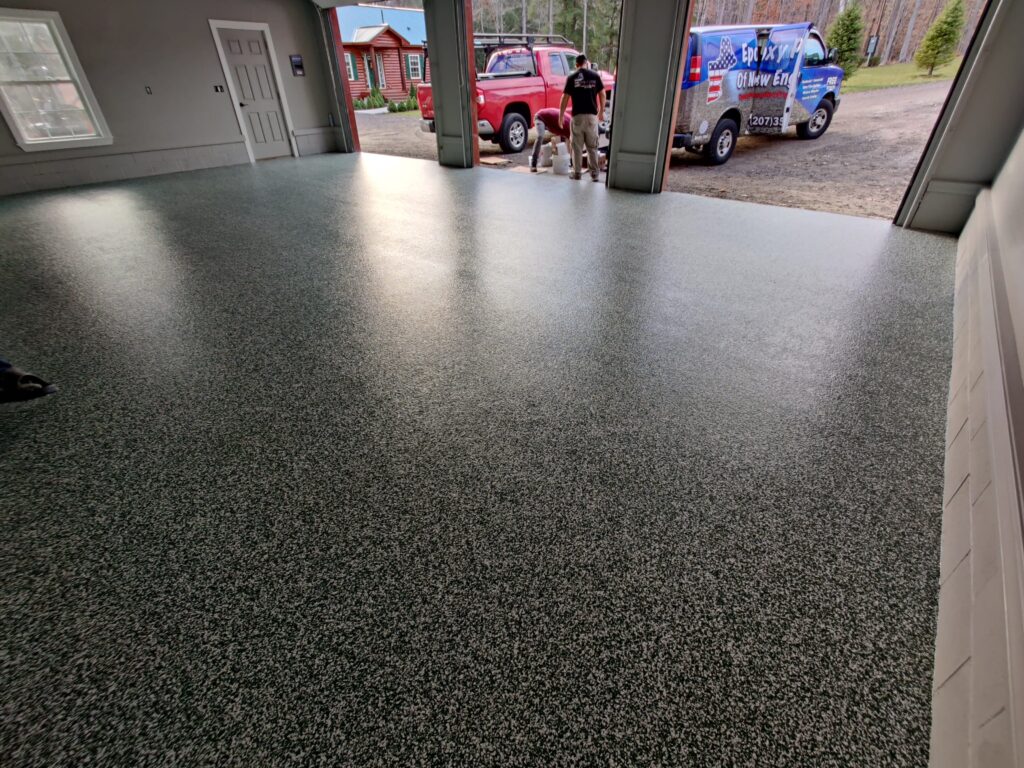
One of the most effective ways to improve traction is through decorative flake systems. Epoxy flake flooring introduces texture naturally by embedding vinyl flakes into the base coat. These flakes break up the surface, creating grip points that reduce slipping.
Full broadcast flake systems are especially effective in garages because they provide consistent texture across the entire floor. Even when wet, the surface maintains traction—making it safer for walking, lifting, and working.
Anti-Slip Additives: Extra Protection Where It Counts
In garages with frequent moisture exposure, professional installers can add anti-slip aggregates to the clear topcoat. These microscopic additives increase friction without making the floor uncomfortable or difficult to clean.
Anti-slip additives are ideal for:
- Family garages with kids and pets
- Homes with sloped driveways
- Workshops and utility garages
- Commercial garages and service bays
The key is applying the right amount—too little reduces effectiveness, too much creates an overly abrasive surface. Experience matters here.
Slip Resistance Without Sacrificing Style
One common misconception is that slip-resistant floors must look industrial or rough. Modern epoxy garage flooring proves otherwise. With a wide range of flake blends and finish options, homeowners can achieve a clean, decorative look and enhanced safety.
Neutral flake colors are especially popular because they hide dirt while maintaining a bright, professional appearance. The result is a garage floor that looks great and performs safely in real-world conditions.
Why DIY Epoxy Floors Often Fall Short on Safety
Many DIY epoxy kits focus on appearance but overlook traction. Smooth finishes may look good initially, but they can become dangerously slippery when wet—especially in winter. DIY installers also rarely understand how to balance texture, additives, and topcoat selection.
Without proper preparation and materials, DIY floors often lose traction over time or peel under hot tires, creating uneven surfaces that increase tripping risks.
Professional Installation Makes Safety Reliable
Slip resistance is only effective if the epoxy bonds correctly to the concrete. Poor surface preparation leads to peeling, bubbling, and smooth patches—undoing any safety benefits. Professional installation ensures:
- Mechanical diamond grinding for proper adhesion
- Moisture testing to prevent coating failure
- Correct flake broadcast and additive ratios
- Durable topcoats designed for traffic and weather
At Epoxy Pros of New England, safety is built into every garage floor we install—not added as an upgrade later.
Ideal Applications for Slip-Resistant Garage Epoxy Flooring
Slip-resistant epoxy flooring is ideal for:
- Residential garages
- Workshops and hobby spaces
- Basement garages and utility areas
- Commercial and fleet garages
Anywhere moisture, vehicles, or foot traffic are present, traction matters.
Safety That Adds Long-Term Value
A safer garage isn’t just about preventing accidents—it also adds value. Buyers appreciate upgrades that reduce risk and maintenance. A professionally installed, slip-resistant epoxy garage floor signals quality, care, and smart investment.
In Maine’s climate, that peace of mind goes a long way.
Safety First Starts With the Right Flooring Partner
Garage epoxy flooring with a slip-resistant finish is one of the smartest upgrades you can make. It protects your family, improves daily usability, and delivers long-term durability—without sacrificing appearance.
Ready for a Safer Garage Floor?
Put safety first with slip-resistant epoxy garage flooring from Epoxy Pros of New England. Contact us today to schedule a consultation and design a garage floor that looks great, performs better, and keeps safety front and center.