
Warehouse & manufacturing floor coatings
Forklift traffic, pallet impact, oil, coolant and washdown — on a slab that cannot be taken out of service for a week. We coat in phases, work nights and weekends, and hand back each zone on a schedule agreed before we mobilise.
Warehouse floors rarely fail from the top down.
Joints break down under wheel impact and start spalling outwards. Forklift tyres pick up a coating that was never mechanically bonded. Moisture drives up through a slab that was poured on grade without a vapour barrier and lifts whole sheets of product off. And in this climate, road salt tracked in from the yard does the rest.
None of that is solved by a better topcoat. It is solved by diagnosing the slab first, repairing the joints properly, and specifying a system with enough build to survive the traffic that building actually sees.
Where we are the right call
- Distribution and storage floors with forklift and pallet-jack traffic
- Manufacturing and process areas with oil, coolant or chemical exposure
- Buildings that need work phased around production rather than shut down
- Failed coatings that need removing and re-specifying, not patching
- Joint and slab repair ahead of racking installation or a tenant fit-out
Where we will tell you something else
- Slabs with active structural movement — that is concrete work first
- Food and beverage production, which needs urethane cement, not epoxy
- Untested slabs with obvious moisture ingress until the source is found
- Areas where polished concrete would serve better and cost less to maintain
- Jobs where the available window genuinely will not allow a proper cure
What gets installed, and what it is rated for.
| Typical system | Epoxy mortar or double broadcast quartz, with a chemical-resistant urethane topcoat |
|---|---|
| Build thickness | 1/8″ to 1/4″ depending on traffic and impact exposure |
| Surface preparation | Shot blasting or diamond grinding to CSP 3–5. Joints saw-cut, cleaned and filled with semi-rigid filler |
| Moisture tolerance | Slab tested before quotation. Vapour barrier primers available where readings require it |
| Chemical resistance | Motor oil, hydraulic and brake fluid, coolant, battery acid, de-icing brine, most solvents |
| Slip resistance | Aggregate graded to the area — higher in wash bays and loading docks, smoother in pick aisles |
| Return to service | Foot traffic 10–14 hrs · forklifts and racking 24–48 hrs at 70°F. Slower on a cold slab and we say so |
| Line marking | Aisle, safety and pedestrian marking applied within the system, not taped over it |
| Cold-weather installs | Heated interiors year-round. Low-temperature polyaspartic rated to 30°F with the slab 5°F above dew point |
| Warranty | Written workmanship warranty, terms by system |
How we keep you running while we work.
Every commercial proposal we issue includes a phasing plan and the hours each zone is out of service. If we cannot make the window work, we will tell you at the walk-through rather than halfway through the install.
Zone the building
We map bays, aisles and access routes with your team and agree the order of work and the hand-back times.
Agreed in writingContain and prepare
Poly containment, negative air where needed and HEPA extraction on every grinder. The rest of the building keeps operating.
Dust containedInstall off-shift
Nights, weekends and shutdown windows. Crews sized to finish the zone inside the agreed window rather than stretch it.
Nights & weekendsHand back and inspect
Each zone walked and signed off before the next one starts, with cure times confirmed on site rather than assumed.
Zone by zoneA recent job in this sector.
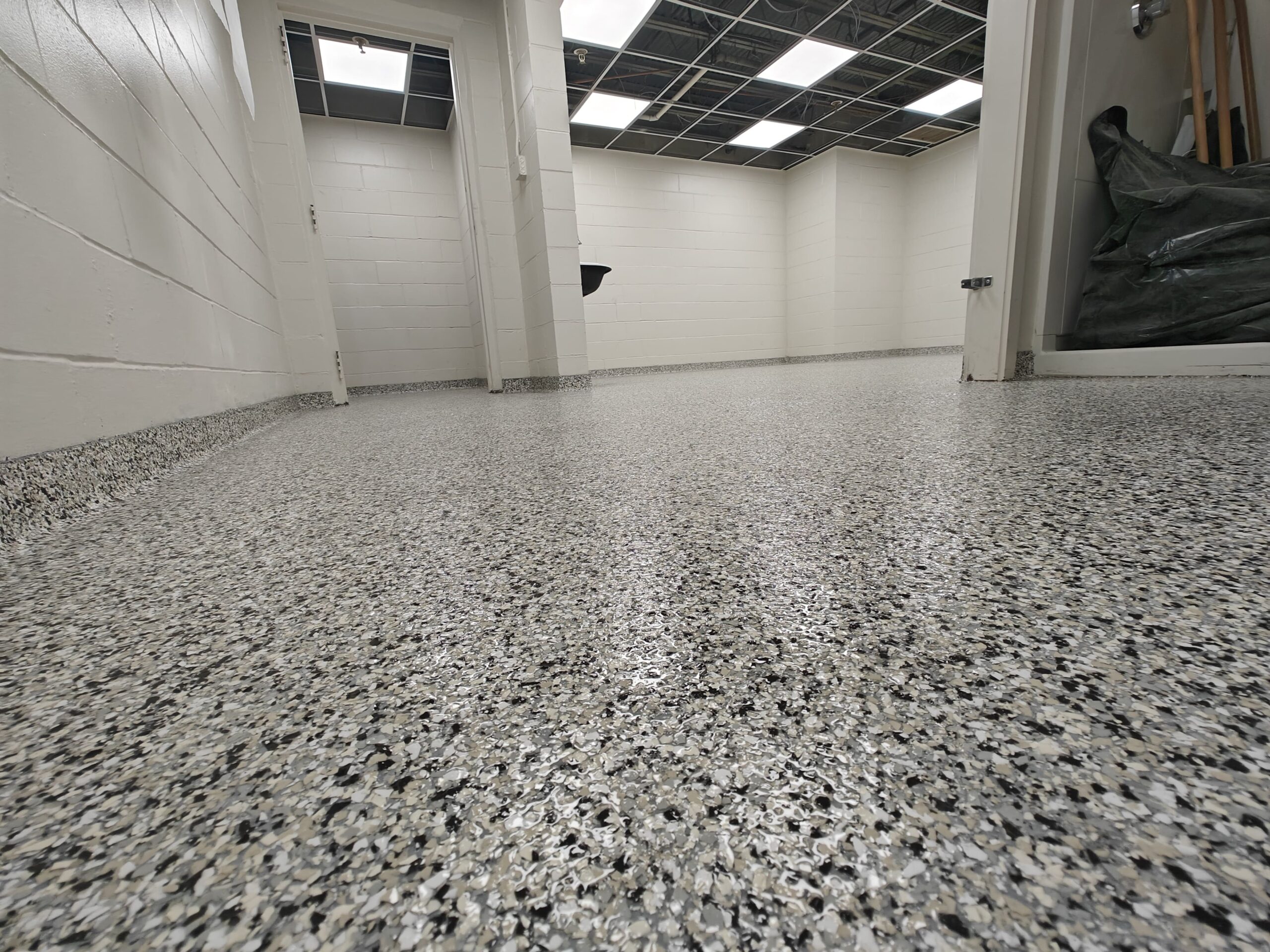
Factory Restroom Epoxy Coating, Biddeford, ME
Installed an industrial epoxy concrete coating system throughout the factory restrooms.
What facility managers ask us first.
How long will the area be out of service?
Can you work nights, weekends or a shutdown week?
The last coating peeled. Why would this be different?
Do you handle line marking and safety demarcation?
We handle food products. Is this the right page?
Walk the building with us.
An hour on site gets you a moisture reading, an honest assessment of the slab and the joints, a system recommendation, and a phasing plan that fits your operation. No obligation, and no pressure to decide on the spot.