
What happens, and when you get the space back.
Diamond grinding, crack and moisture repair, coating and cure — in that order, with the real timings. On a commercial job the schedule is agreed before we mobilise; on a garage it is usually a single day.
Four stages, and you know when you get the space back.
Site assessment
We walk the building, test the slab for moisture and dew point, review chemical exposure and agree the shutdown window. You get a written scope, not a number on a card.
On site, no obligationPreparation
Diamond grinding or shot blasting to profile, crack and joint repair, and HEPA extraction so the rest of the building stays open.
Dust contained · CSP 2–3Installation
Base coat, broadcast and topcoat, phased by bay or zone. Overnight and weekend work where production cannot stop.
Phased by zoneReturn to service
Foot traffic the following morning, vehicles and racking the day after. Cold slabs cure slower and we tell you the real number.
10–14 hrs foot · 24–48 hrs loadWhen you get the space back.
| Foot traffic | 10–14 hrs after the final coat, at 70°F |
|---|---|
| Vehicles and racking | 24–48 hrs at 70°F. Longer on a cold slab, and we tell you the real number for your building |
| Full chemical exposure | 48–72 hrs before washdown, caustic cleaning or spillage |
| Polyaspartic systems | Recoat window of 1–2 hrs, which is what makes a same-day turnaround possible |
| Polished concrete | Immediate once the area has been cleaned down — there is no coating to cure |
| Cold-weather limit | Heated interiors year-round. Polyaspartic to approximately 30°F with the slab 5°F above dew point |
| What slows it down | A cold slab, high humidity, or a dew point close to the slab temperature. All three are measured on the day rather than assumed |
| Warranty | Written workmanship warranty, terms by system |
What we need from you, and what we bring.
What we need from you
- The floor clear — we can help with heavy items, but not with the contents
- Access to power, and to water where the system needs it
- A named contact who can answer a question on the day
- On a commercial job, the shutdown window confirmed in writing
- Any site induction or contractor paperwork sent ahead rather than on the morning
What we turn up with
- Diamond grinders and shot blasters with HEPA extraction
- Moisture and dew point meters, used before the first coat goes down
- Containment and negative air where the building stays occupied
- Every material for the system, so nothing is substituted mid-job
- A written record of the readings taken, handed over at the end
Recent commercial installations.
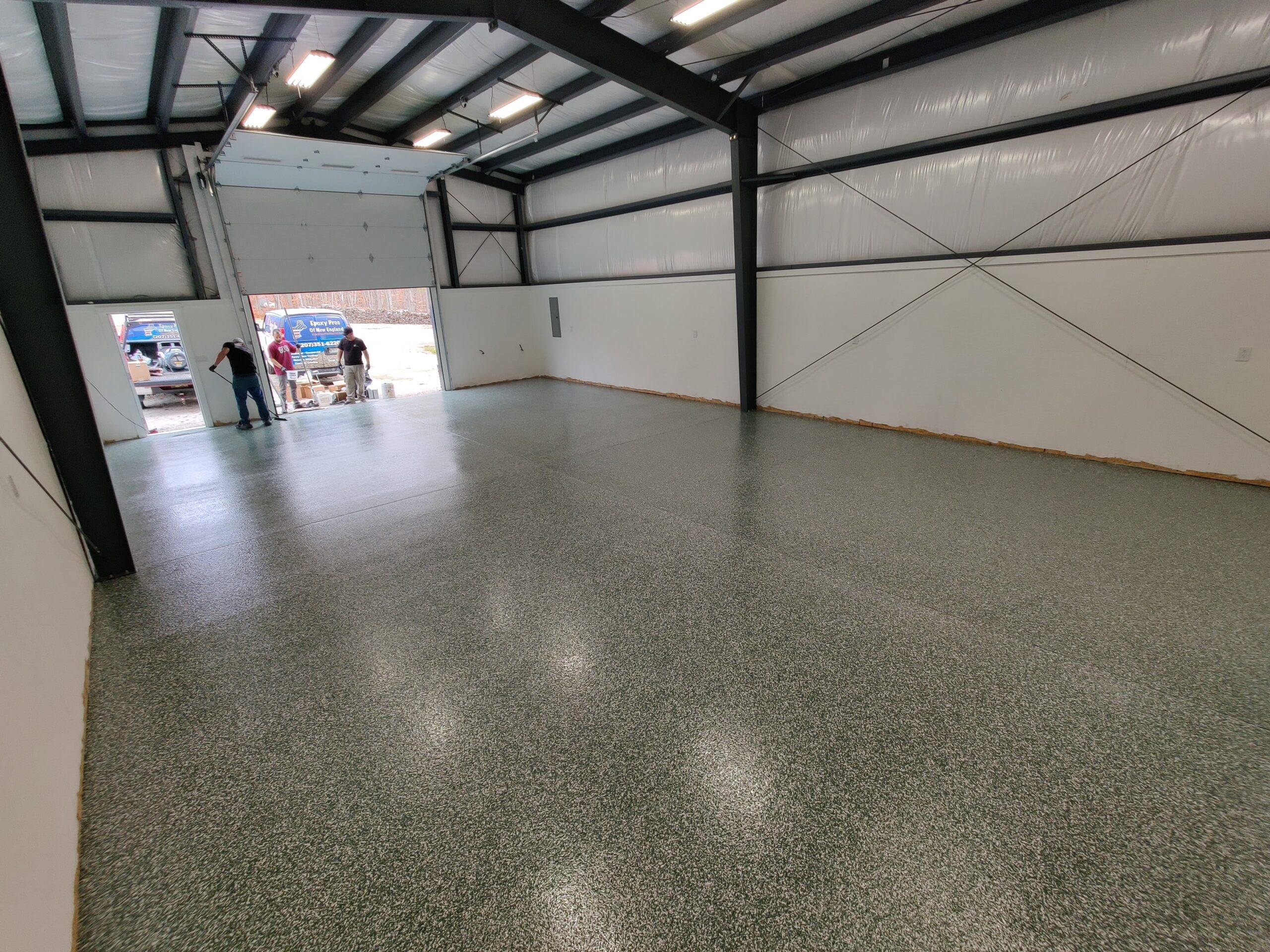
Eagle Flake Shop Floor, Paris, ME
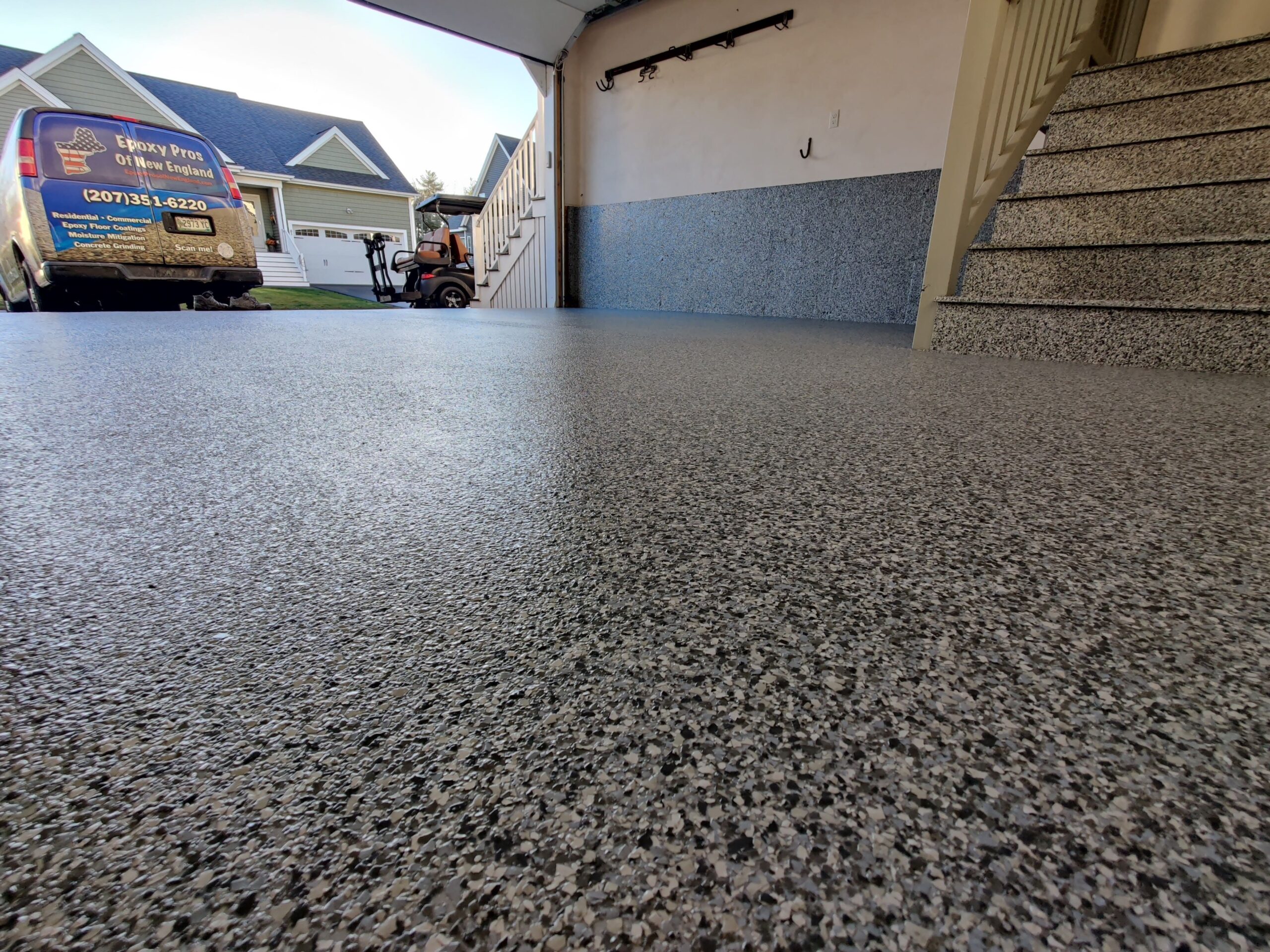
Polar Flake Floor Coating, Wells, ME
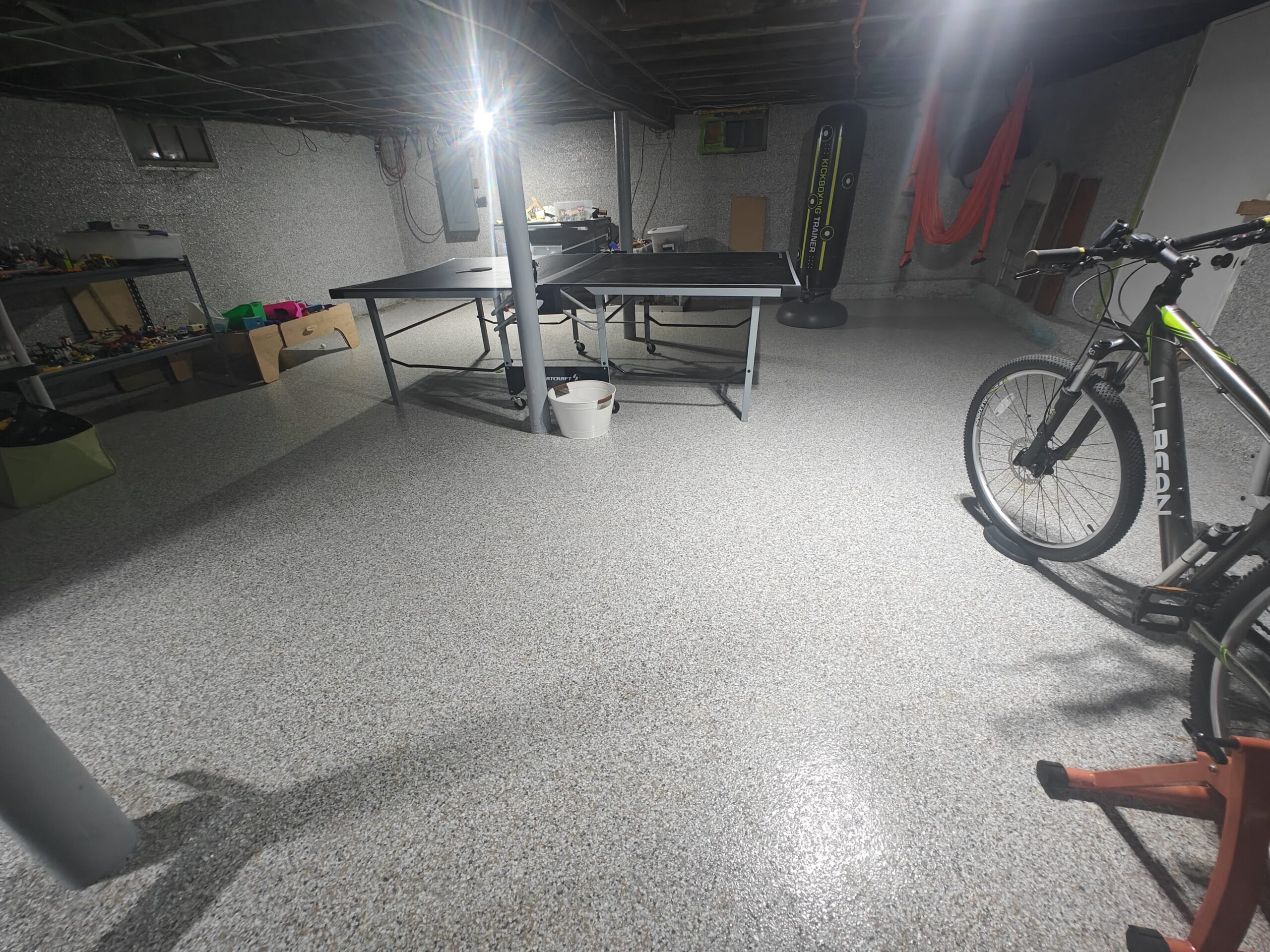
Moisture Mitigation Basement Floor, Berwick, ME
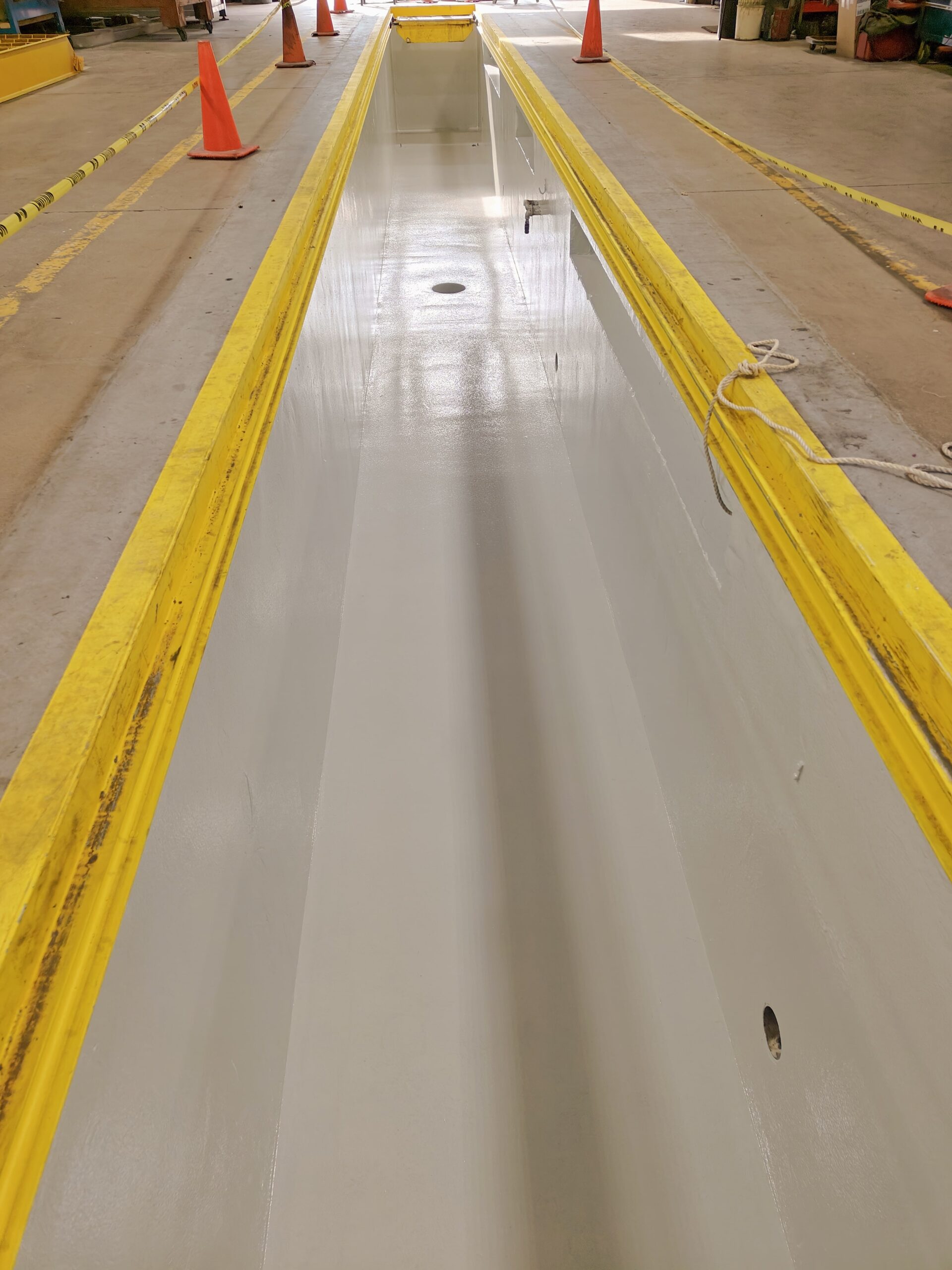
Bus Company Mechanical Pit Coating, Rollinsford, NH
What people ask about the work.
Why grind rather than acid etch?
Will the rest of the building be full of dust?
How much of my building has to stop?
How quickly can we use the floor again?
Do you work nights, weekends and shutdowns?
Can you install in winter?
The last coating failed. Why would this be different?
What does a site assessment involve?
Book a site assessment.
We walk the building, test the slab, and put a written scope and a realistic shutdown plan in front of you. No obligation, and if the timing or the system is wrong for your space we will say so.