
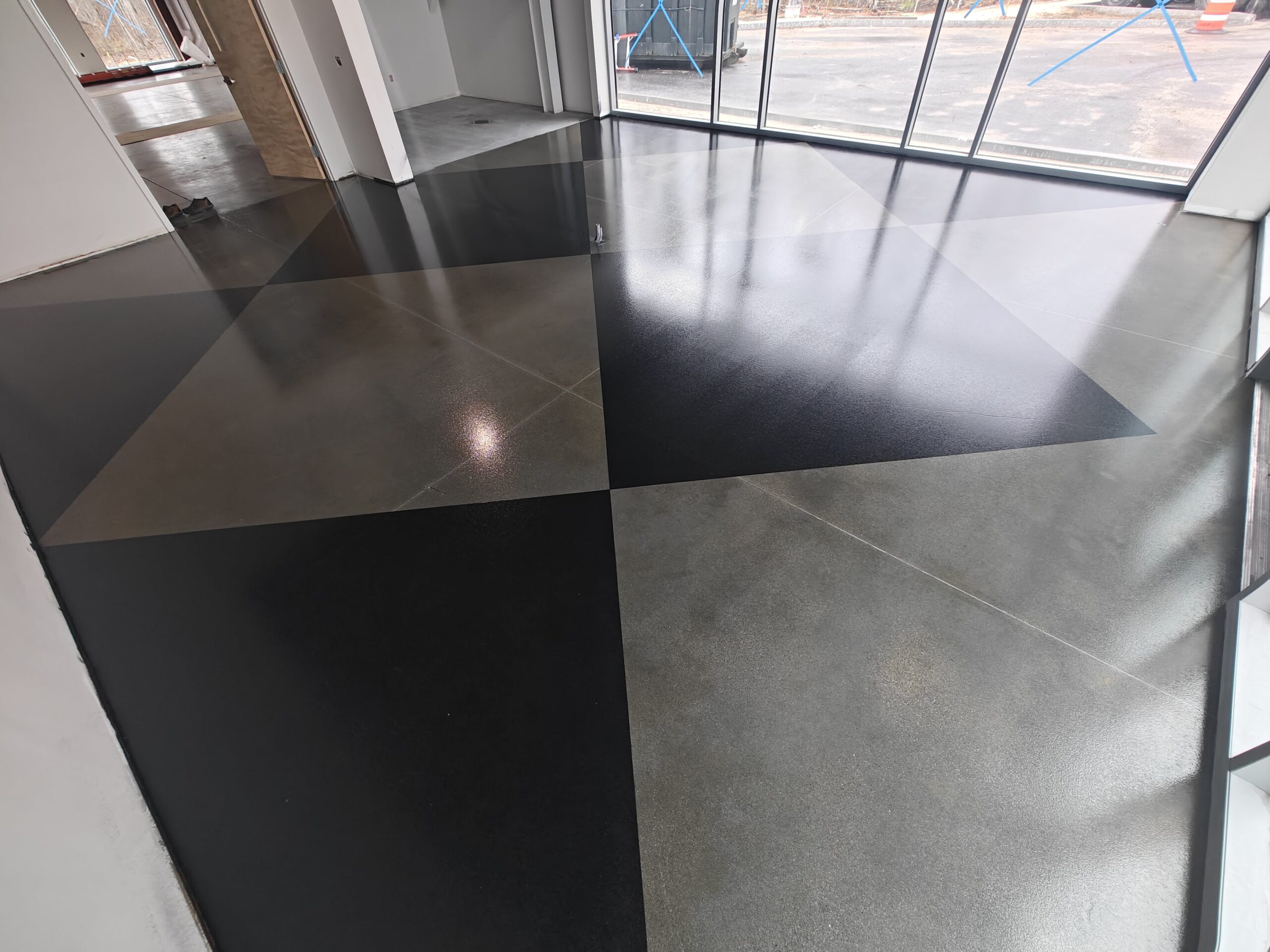
Auto shop, fleet & showroom floor coatings
Two floors in one building. The service bays take oil, brake fluid, coolant, road salt and a lift post through them; the showroom has to make a car look like it is worth the money. We specify them separately and install them around your bay schedule.
Service bay floors fail at the tyre, not the drain.
Hot tyre pickup is the classic one: a car is driven in on warm tyres, parked, and when it pulls out the coating comes with it in a tread pattern. That is a bonding and a chemistry problem, not bad luck — a thin box-store product over a poorly prepared slab will do it every time.
The rest is chemistry and salt. Brake fluid strips a weak topcoat. Coolant and battery acid stain it. And in this climate every vehicle that comes through the door in January brings brine in with it, which sits in the low spots and works into any pinhole in the surface.
Where we are the right call
- Service bays, lube bays and lift areas with oil and fluid exposure
- Fleet and municipal vehicle garages that see road salt all winter
- Showrooms needing a finish that presents the stock properly
- Parts, wash and detailing areas with standing water
- Bay line marking and safety demarcation applied within the system
Where we will tell you something else
- Slabs with lift posts that need structural attention first
- Buildings where polished concrete would serve the showroom better
- Untested slabs with obvious moisture ingress
- Shops that cannot release a bay for even a single day
- Anyone wanting a residential-grade product in a commercial bay
What gets installed, and what it is rated for.
| Typical system | Chemical-resistant epoxy base with a urethane or polyaspartic topcoat; metallic or flake in showrooms |
|---|---|
| Build thickness | 20–30 mils in bays; 1/8″ where impact or dropped tooling is routine |
| Surface preparation | Diamond grinding to CSP 2–3, with oil-contaminated areas degreased and re-profiled before priming |
| Chemical resistance | Motor oil, transmission and brake fluid, coolant, battery acid, de-icing brine, solvents |
| Hot tyre pickup | Resistant by specification — a properly bonded, fully cured system does not lift at the tread |
| Slip resistance | Textured in wash and wet bays, smoother in showrooms where appearance leads |
| Return to service | Foot traffic 10–14 hrs · vehicles 24–48 hrs at 70°F |
| Line marking | Bay, walkway and hazard marking applied within the system rather than taped over it |
| Warranty | Written workmanship warranty, terms by system |
How we keep you running while we work.
Every commercial proposal we issue includes a phasing plan and the hours each zone is out of service. If we cannot make the window work, we will tell you at the walk-through rather than halfway through the install.
Bay by bay
We agree which bays come out and when, so the shop keeps taking work throughout.
You keep tradingDegrease and prepare
Years of oil ground out and the slab profiled. Contaminated areas treated before anything is primed.
Contamination removedCoat and mark
System laid, then bay lines and walkways applied within it rather than on top of it.
Marked, not tapedVehicles back on
Foot traffic overnight, vehicles and lifts the day after.
24–48 hrsA recent job in this sector.
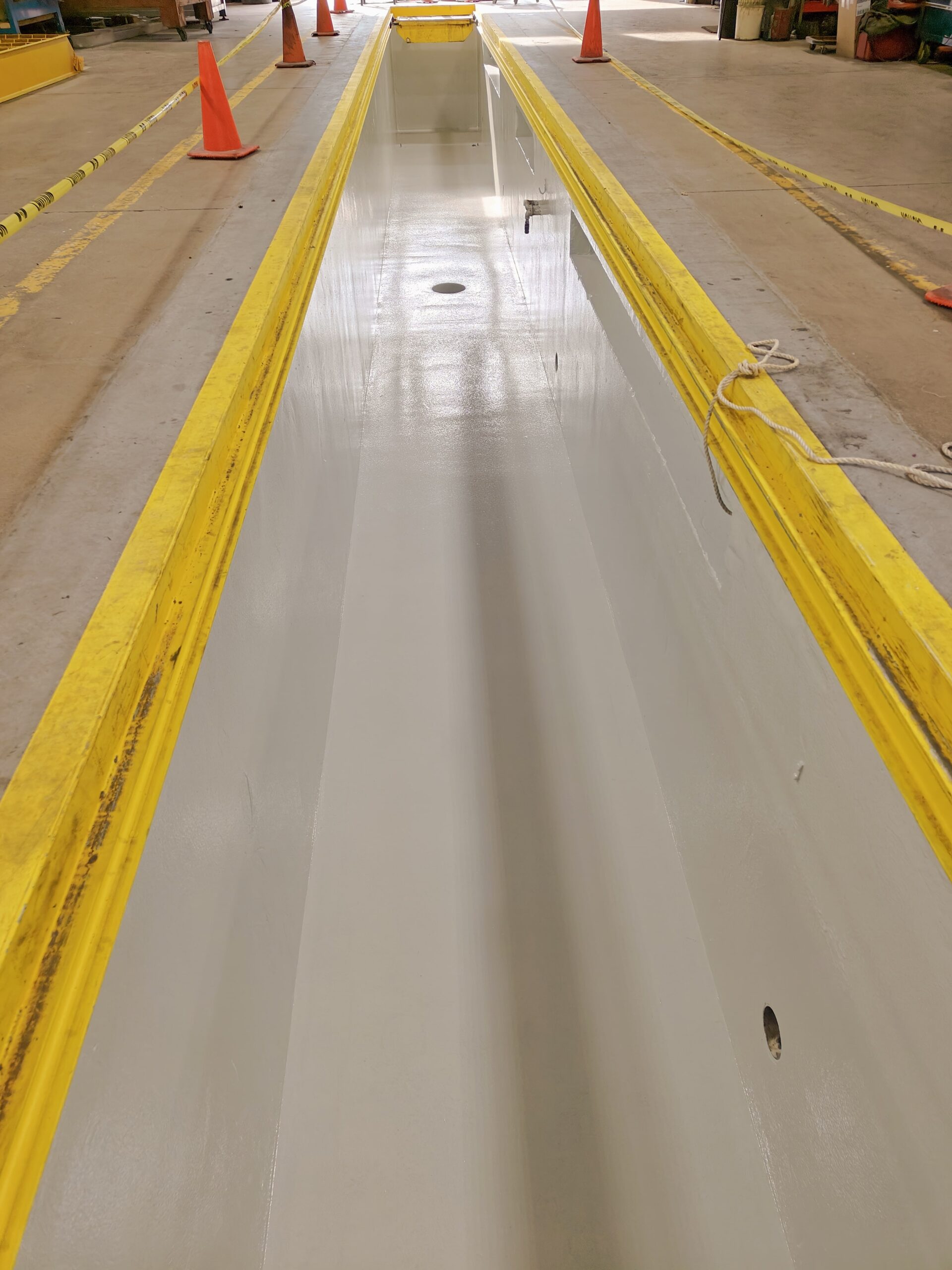
Bus Company Mechanical Pit Coating, Rollinsford, NH
Renewed the commercial epoxy coating in one of the mechanical service pits.
What facility managers ask us first.
Will it lift when a hot tyre parks on it?
Can you do it without closing the shop?
What about the lift posts?
Can the showroom match the service side?
Walk the building with us.
An hour on site gets you a moisture reading, an honest assessment of the slab and the joints, a system recommendation, and a phasing plan that fits your operation. No obligation, and no pressure to decide on the spot.