
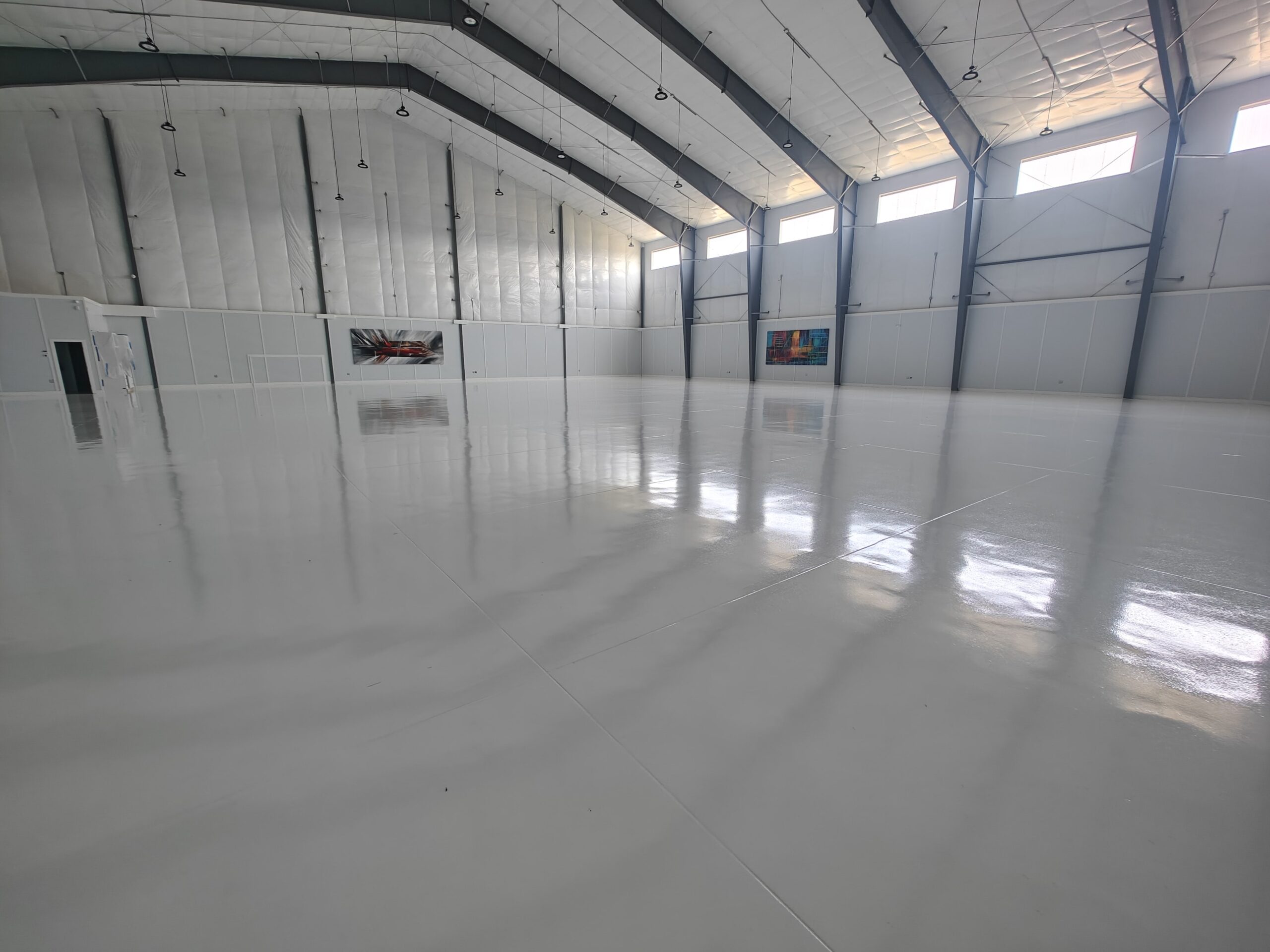
Concrete polishing & grinding
Warehouses, retail and institutional floors where there should be no coating to peel at all.
What concrete polishing actually is.
The slab mechanically ground through progressive diamond grits, chemically densified, then polished to a chosen gloss. There is no coating: the floor is the finish. That is the whole argument for it — nothing to delaminate, nothing to re-coat, and a surface that gets harder rather than thinner with traffic.
Where we are the right call
- Warehouse and distribution floors with sound existing concrete
- Retail, showroom and institutional spaces wanting low maintenance
- Buildings that cannot take the downtime of a coating cure
- Owners tired of re-coating the same floor every few years
Where we will tell you something else
- Slabs with heavy patching, poor finish or exposed rebar
- Areas with chemical exposure that needs a barrier
- Food production floors
- Anyone expecting it to hide what is already in the concrete
What it is rated for.
| Process | Progressive diamond grinding, chemical densification, then polishing to the specified gloss |
|---|---|
| Gloss levels | From matte through satin to high gloss, specified by area and by how it will be maintained |
| Aggregate exposure | Cream, salt-and-pepper or full aggregate, decided at the walk-through against what the slab will actually give |
| Return to service | Immediate for foot traffic once the area is cleaned down |
| Maintenance | Dust mop and auto-scrubber. No re-coating cycle |
| Limitation | Not a chemical barrier. A polished floor still stains if something is left on it |
| Warranty | Written workmanship warranty, terms by system |
Four stages, and you know when you get the space back.
Site assessment
We walk the building, test the slab for moisture and dew point, review chemical exposure and agree the shutdown window. You get a written scope, not a number on a card.
On site, no obligationPreparation
Diamond grinding or shot blasting to profile, crack and joint repair, and HEPA extraction so the rest of the building stays open.
Dust contained · CSP 2–3Installation
Base coat, broadcast and topcoat, phased by bay or zone. Overnight and weekend work where production cannot stop.
Phased by zoneReturn to service
Foot traffic the following morning, vehicles and racking the day after. Cold slabs cure slower and we tell you the real number.
10–14 hrs foot · 24–48 hrs loadWhat people ask about this system.
Is polished concrete cheaper than coating?
Will it stain?
How much of my building has to stop?
How quickly can we use the floor again?
Do you work nights, weekends and shutdowns?
Can you install in winter?
The last coating failed. Why would this be different?
What does a site assessment involve?
Book a site assessment.
We walk the building, test the slab, and put a written scope and a realistic shutdown plan in front of you. No obligation, and if the timing or the system is wrong for your space we will say so.