
Fire station & municipal floor coatings
An apparatus bay carries more weight than almost any floor we coat, gets washed down daily, and cannot be out of service — the truck has to go out whatever we have got on the floor. We work around that, and we have done the paperwork a public job needs.
Weight, brine and a bay that cannot close.
An apparatus floor takes a loaded engine on a few square inches of tyre contact, gets washed down after every call, and spends the winter covered in the brine the truck brings back. Add a floor drain that has been there since the station was built and you have the three things that destroy a coating: point load, constant water and chloride.
The scheduling problem is harder than the specification. The bay has to be able to release a truck. We work one bay at a time, in halves where we have to, and we plan the sequence with the officer on duty rather than presenting it to them.
Where we are the right call
- Apparatus bays, DPW garages and municipal vehicle buildings
- Floors with daily washdown and heavy de-icing chemical exposure
- Slab and joint repair around drains and bay doors
- Public buildings, transfer stations and treatment facilities
- Bid work with prevailing wage and submittal requirements
Where we will tell you something else
- Slabs where the drainage needs civil work before any coating
- Structural cracking that needs an engineer, not a contractor
- Buildings that cannot release a single bay at any point
- Exterior apron and approach slabs in mid-winter
- Scopes where polished concrete would serve a public lobby better
What gets installed, and what it is rated for.
| Typical system | Epoxy mortar or double broadcast quartz with a salt- and chemical-resistant urethane topcoat |
|---|---|
| Build thickness | 1/8″ to 1/4″ in apparatus bays, graded up at door thresholds and drain surrounds |
| Surface preparation | Shot blasting to CSP 4–5, with joints and drain surrounds cut out, cleaned and rebuilt |
| Load | Specified for apparatus point loading and for the jack and outrigger loads that come with it |
| Chemical resistance | De-icing brine and chlorides, diesel, hydraulic fluid, foam concentrate, washdown chemistry |
| Slip resistance | Heavy texture through the bay and at the apron threshold where water and brine collect |
| Return to service | Foot traffic 10–14 hrs · apparatus 24–48 hrs at 70°F |
| Line marking | Bay, walkway and equipment marking applied within the system |
| Warranty | Written workmanship warranty, terms by system |
How we keep you running while we work.
Every commercial proposal we issue includes a phasing plan and the hours each zone is out of service. If we cannot make the window work, we will tell you at the walk-through rather than halfway through the install.
Plan with the duty officer
The sequence is agreed with the people who have to get a truck out of the building, not handed to them.
Response comes firstOne bay, or half of one
We work in the smallest unit the station can release, and the apparatus relocates for the shortest time possible.
Smallest unit possiblePrepare and rebuild
Shot blasting, joint and drain repair, then the system laid to falls.
Drains detailedBack in service
Foot traffic overnight, apparatus back on the floor within 24 to 48 hours.
24–48 hrsA recent job in this sector.
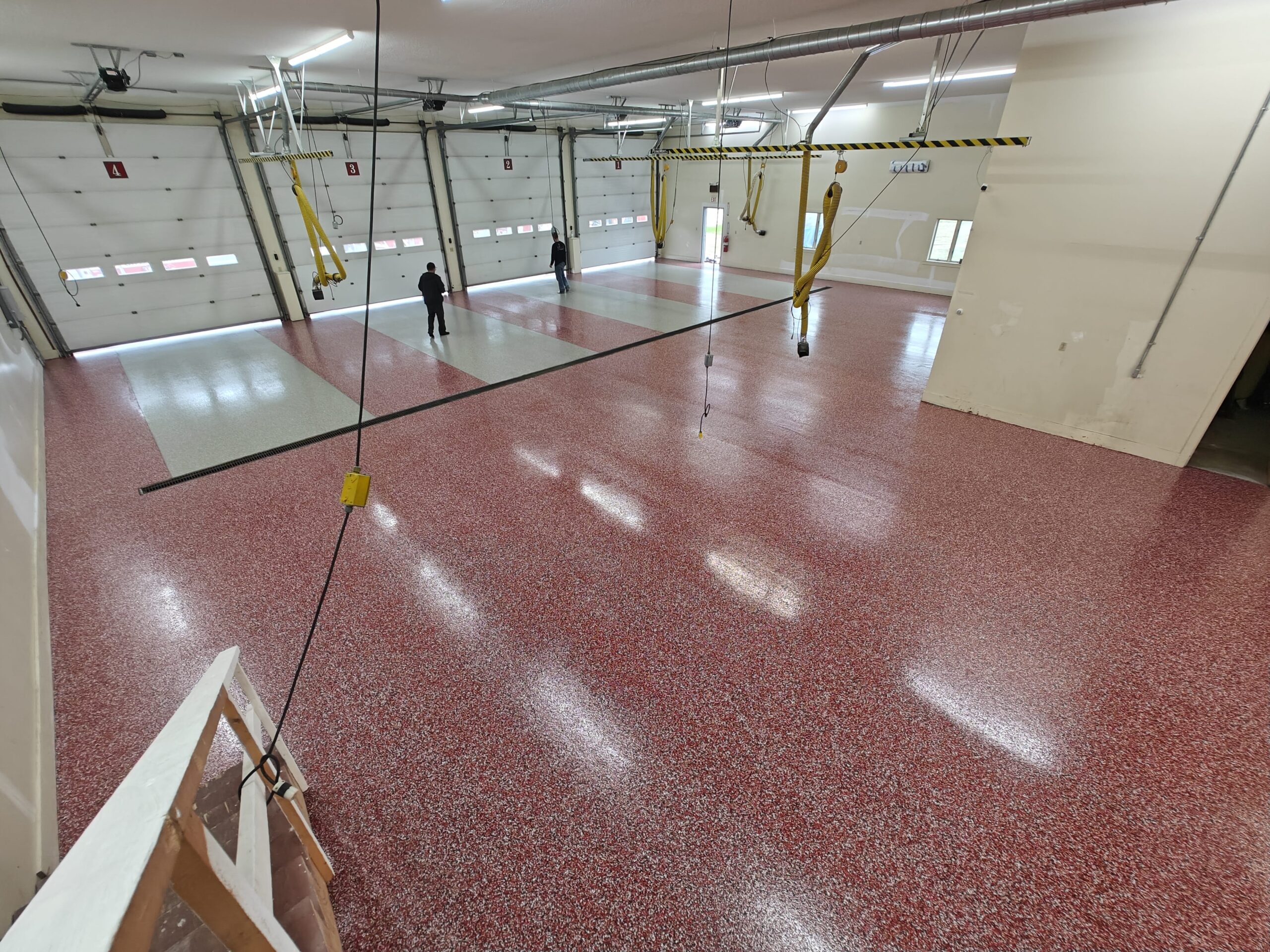
Fire Department Commercial Epoxy Flooring, Lamoine, ME
Installed a commercial-grade epoxy flooring system through the apparatus bay.
What facility managers ask us first.
The bay cannot go out of service. Can this work?
Will it take the weight of an engine?
Do you bid public work?
When is the best time of year?
Walk the building with us.
An hour on site gets you a moisture reading, an honest assessment of the slab and the joints, a system recommendation, and a phasing plan that fits your operation. No obligation, and no pressure to decide on the spot.