
Commercial & industrial concrete coatings · Maine and New Hampshire
213 Route 236, Berwick, ME Mon–Fri 8:30am–6:00pm (207) 351-6220
Epoxy Pros of New England
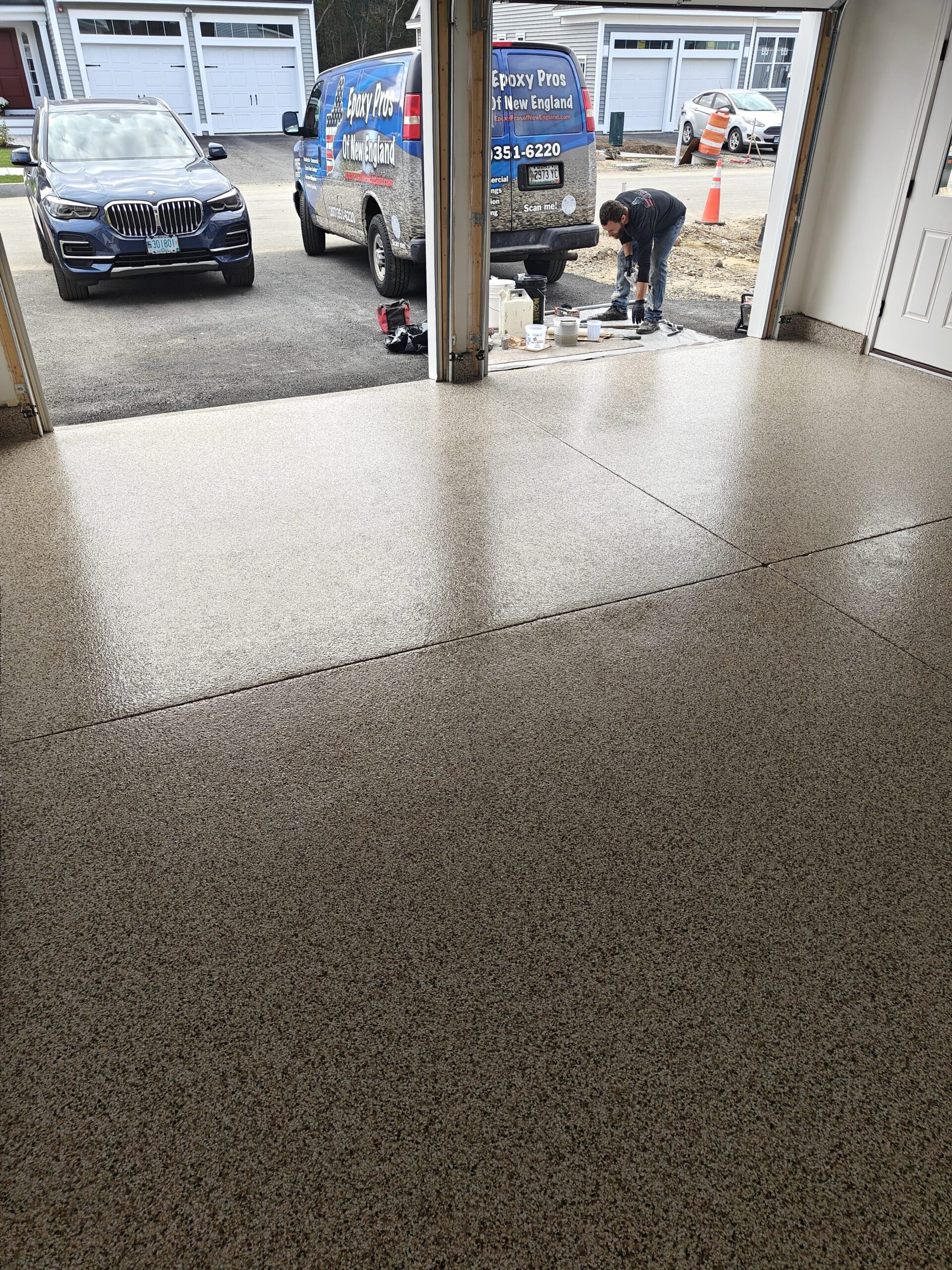
Epoxy Garage Floor by Epoxy Pros of New England Portsmouth NH-min

Garage floor coating

Residential and light commercial garages that take road salt, hot tyres and a winter of brine off the car.

20–30 mils · one day on site · slip resistantKey specification
Ground, never etchedMeasured surface profile
Moisture testedBefore anything is specified
Documented cureReal figures, not data-sheet ones
What it is

What garage floor coating actually is.

A ground and primed slab with a broadcast flake or solid-colour base and a clear polyaspartic or urethane topcoat. Most garages are one day on site. The system matters less than the preparation underneath it: this is the floor most often sold as a weekend job, and the one we are most often called back to replace because it was.

Where we will tell you something else

  • Slabs with untreated moisture ingress — that gets tested and solved first
  • Badly spalled or cracked concrete, which needs repair before coating
  • Unheated garages in deep winter, where we would rather wait for spring
  • Commercial service bays, which need a heavier chemical-resistant build
Specification

What it is rated for.

Build thickness20–30 mils
Surface preparationDiamond grinding to CSP 2–3. Never acid etched
Time on site1 day for a typical two-car garage
Return to serviceFoot traffic 10–14 hrs · vehicles 24–48 hrs
Temperature rangeInstalled year-round in a heated garage; polyaspartic to 30°F with the slab 5°F above dew point
Chemical resistanceDe-icing brine, motor oil, brake fluid, coolant, screenwash
Slip resistanceFlake broadcast gives texture as standard; additional aggregate available
WarrantyWritten workmanship warranty, terms by system
How a commercial job runs

Four stages, and you know when you get the space back.

Stage 01

Site assessment

We walk the building, test the slab for moisture and dew point, review chemical exposure and agree the shutdown window. You get a written scope, not a number on a card.

On site, no obligation
Stage 02

Preparation

Diamond grinding or shot blasting to profile, crack and joint repair, and HEPA extraction so the rest of the building stays open.

Dust contained · CSP 2–3
Stage 03

Installation

Base coat, broadcast and topcoat, phased by bay or zone. Overnight and weekend work where production cannot stop.

Phased by zone
Stage 04

Return to service

Foot traffic the following morning, vehicles and racking the day after. Cold slabs cure slower and we tell you the real number.

10–14 hrs foot · 24–48 hrs load
Common questions

What people ask about this system.

How long before I can park on it?
Foot traffic the same evening or the next morning, roughly 10 to 14 hours after the last coat. Vehicles after 24 to 48 hours. On a cold slab both take longer, and we give you the figure for your garage rather than the one on the data sheet.
Will hot tyres lift it?
Not if the slab was ground rather than etched and the system was allowed to cure before a car went on it. Hot tyre pickup is a preparation and cure-time failure, not a product one, which is why we will not shorten either.
Can you do it in winter?
In a heated garage, yes, year-round. In an unheated one it depends on the slab temperature and the dew point — polyaspartic goes down to about 30°F with the slab 5°F above dew point, and below that we would rather book you for spring than lay a floor that will not cure properly.
What about the cracks in my floor?
They get repaired first, as part of the job. A coating laid over a moving crack will telegraph it within a season. We will also tell you if a crack looks structural rather than cosmetic, because that is a concrete question before it is a coating one.
How much of my building has to stop?
As little as we can engineer. Almost all of our commercial work is phased — one bay, one zone or one room at a time — so the whole facility is never down at once. We agree the sequence and the hand-back times at the walk-through and put them in the proposal, which means you can plan around a number rather than a promise.
How quickly can we use the floor again?
Foot traffic roughly 10 to 14 hours after the last coat, vehicles, racking and equipment after 24 to 48 hours, both at 70°F. A cold slab is slower and we will tell you the real figure for your building rather than the data-sheet one.
Do you work nights, weekends and shutdowns?
Yes, and on most commercial jobs that is how we prefer to run it. Off-shift work is normal scheduling for us rather than an exception we charge extra to accommodate. Holiday and summer shutdown windows are the easiest of all to plan against.
Can you install in winter?
In a heated interior, year-round — and winter is often the best time to book institutional and municipal work, because the building is quiet and our calendar is not competing with the summer rush. Polyaspartic systems install down to about 30°F with the slab 5°F above dew point. You may see −40°F claimed elsewhere in this industry; it is not supported by any manufacturer data sheet we work from.
The last coating failed. Why would this be different?
Nearly every failure we are called in to replace comes down to one of three things: the slab was acid etched or not prepared at all, nobody tested it for moisture, or the joints were coated over instead of being repaired. We grind or shot blast to a measured profile, we test and record moisture and dew point before anything goes down, and we treat joints as a separate detail.
What does a site assessment involve?
About an hour on site. We test the slab for moisture, look at the joints, the drains and the thresholds, ask what gets spilled on the floor and what cleans it, and talk through when the space can realistically be released. You get a written scope with a system recommendation and a phasing plan. There is no obligation and no pressure to decide on the spot.
Next step

Let us come and measure it.

We look at the slab, test it for moisture, and give you a real figure for your floor rather than a price per square foot over the phone. No obligation.

Speak to us directly(207) 351-6220
Mon–Fri 8:30am–6:00pm · peter@epoxyprosofnewengland.com

Tell us about the facility

We reply the same working day wherever we can.

We do not pass your details to anyone, and the owner runs the assessments personally.

Scroll to Top