
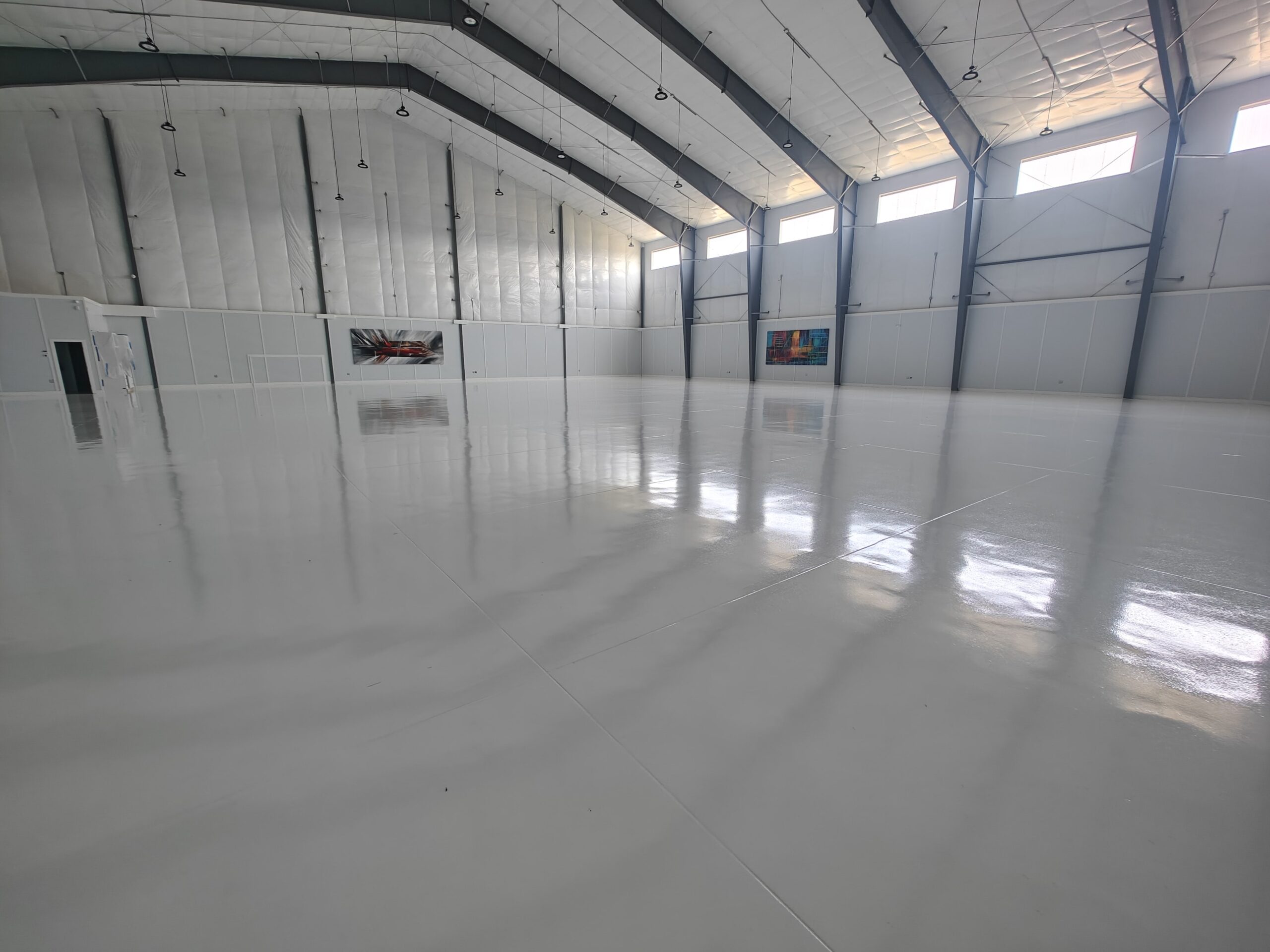
Polyaspartic & polyurea coatings
Fast turnarounds and cold-weather installs where the space cannot be out of use for long.
What polyaspartic & polyurea actually is.
A fast-curing topcoat chemistry, usually laid over an epoxy or polyaspartic base with a flake or quartz broadcast between them. Two things distinguish it: it cures fast enough to hand a space back the same day, and it is UV stable, so it does not amber the way a standard epoxy does under daylight.
Where we are the right call
- Spaces that have to be back in use the same day or the next
- Cold-weather installs where an epoxy would not cure reliably
- Floors exposed to daylight, where epoxy would amber over time
- Commercial areas with a single short shutdown window
Where we will tell you something else
- Heavy industrial floors needing the build of an epoxy mortar
- Food and beverage production, which needs urethane cement
- Slabs where the real constraint is moisture rather than schedule
- Anyone told it installs at −40°F — that figure is wrong and we will not repeat it
What it is rated for.
| Build thickness | 20–30 mils as a full system |
|---|---|
| Surface preparation | Diamond grinding to CSP 2–3 |
| Temperature range | Rated to approximately 30°F with the slab 5°F above dew point. Claims of −40°F are not supported by manufacturer data |
| Cure | Recoat in 1–2 hrs · foot traffic 10–14 hrs · vehicles 24–48 hrs |
| UV stability | Does not yellow in daylight, unlike a standard epoxy topcoat |
| Chemical resistance | Good against brine, oil and most automotive fluids; epoxy remains better against some solvents |
| Warranty | Written workmanship warranty, terms by system |
Four stages, and you know when you get the space back.
Site assessment
We walk the building, test the slab for moisture and dew point, review chemical exposure and agree the shutdown window. You get a written scope, not a number on a card.
On site, no obligationPreparation
Diamond grinding or shot blasting to profile, crack and joint repair, and HEPA extraction so the rest of the building stays open.
Dust contained · CSP 2–3Installation
Base coat, broadcast and topcoat, phased by bay or zone. Overnight and weekend work where production cannot stop.
Phased by zoneReturn to service
Foot traffic the following morning, vehicles and racking the day after. Cold slabs cure slower and we tell you the real number.
10–14 hrs foot · 24–48 hrs loadWhat people ask about this system.
Is polyaspartic better than epoxy?
How cold can you install it?
Can you really finish in one day?
How much of my building has to stop?
How quickly can we use the floor again?
Do you work nights, weekends and shutdowns?
Can you install in winter?
The last coating failed. Why would this be different?
What does a site assessment involve?
Book a site assessment.
We walk the building, test the slab, and put a written scope and a realistic shutdown plan in front of you. No obligation, and if the timing or the system is wrong for your space we will say so.