
Twelve systems, matched to the building.
Coatings, polished concrete, overlays and repair. Each one is specified for a particular set of problems, and part of our job at the walk-through is telling you which of them your floor actually needs — including when a cheaper one is genuinely enough.
Applied systems.
A film bonded to a prepared slab. What varies is the build, the chemistry and how fast it cures — which is what decides where each one belongs.
Full broadcast quartz flooring
Wet areas, kitchens, locker rooms and schools. Slip-resistant and built for constant traffic.
1/8" build · slip rated · repairablePolyaspartic & polyurea coatings
Fast turnarounds and cold-weather installs where the space cannot be out of use for long.
Installs to 30°F · rapid cure · UV stable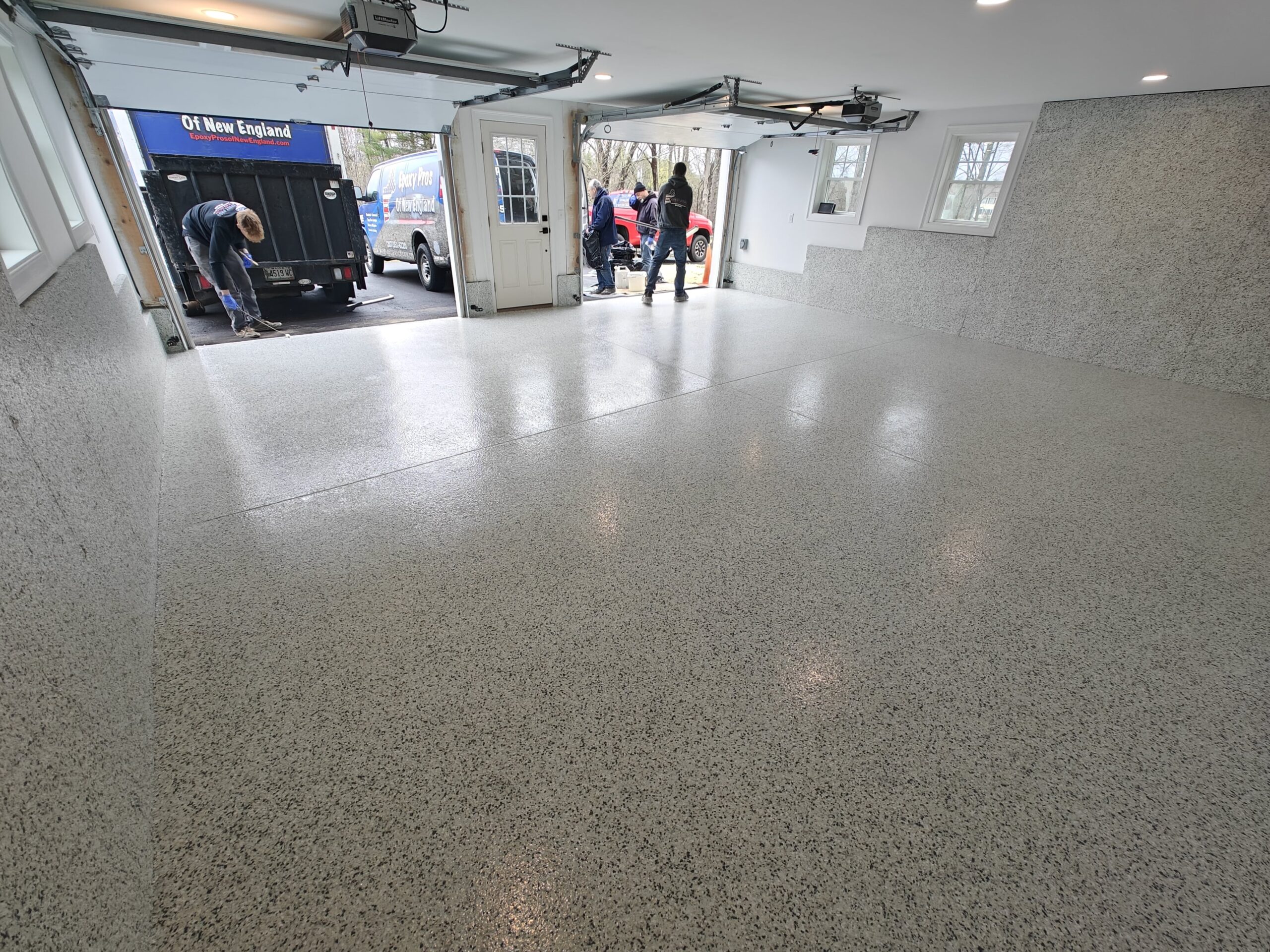
Full broadcast flake epoxy flooring
Service bays, workshops, corridors, showrooms and garages that need a hard-wearing seamless surface.
20–30 mils · seamless · slip resistant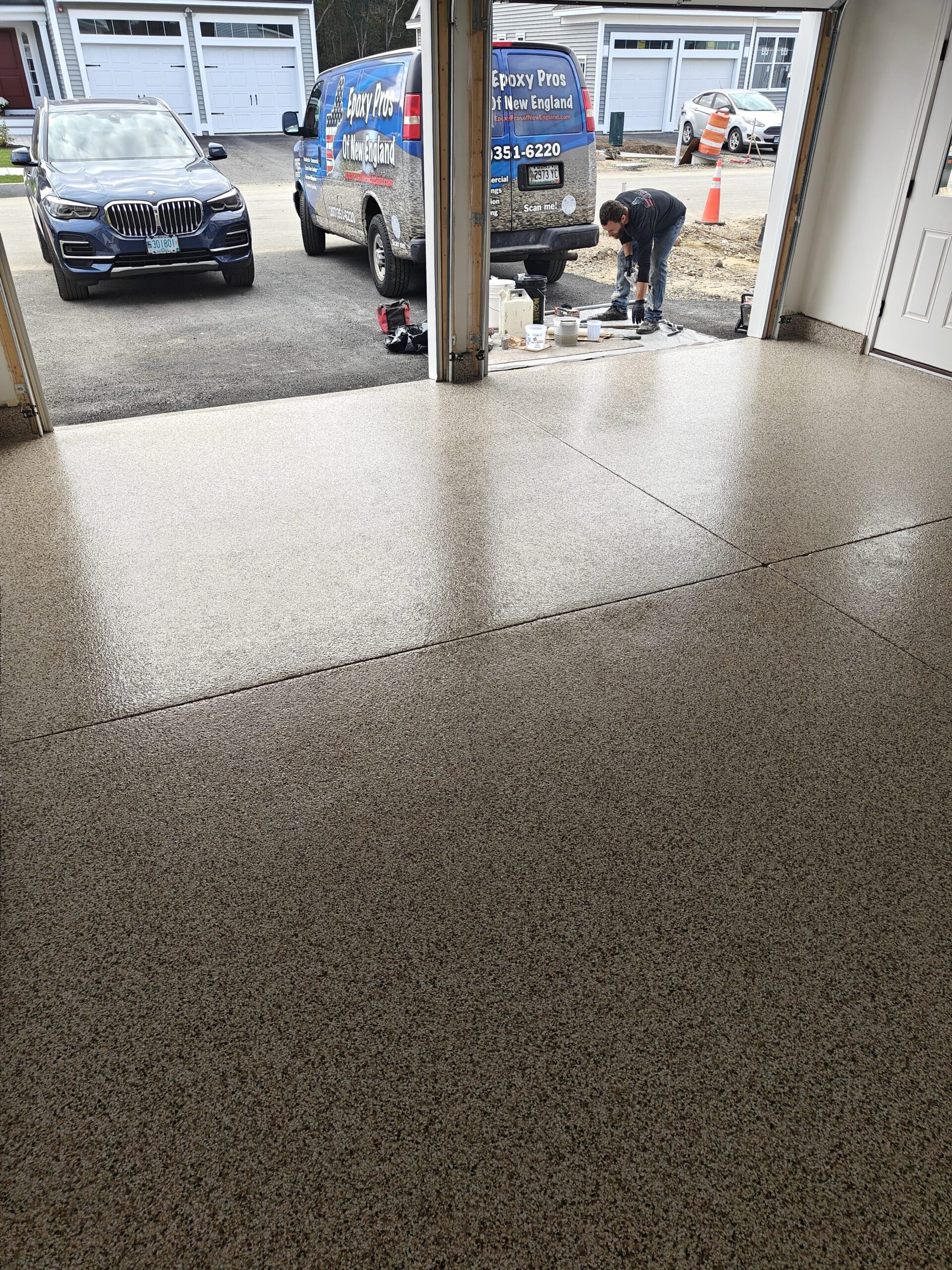
Garage floor coating
Residential and light commercial garages that take road salt, hot tyres and a winter of brine off the car.
20–30 mils · one day on site · slip resistant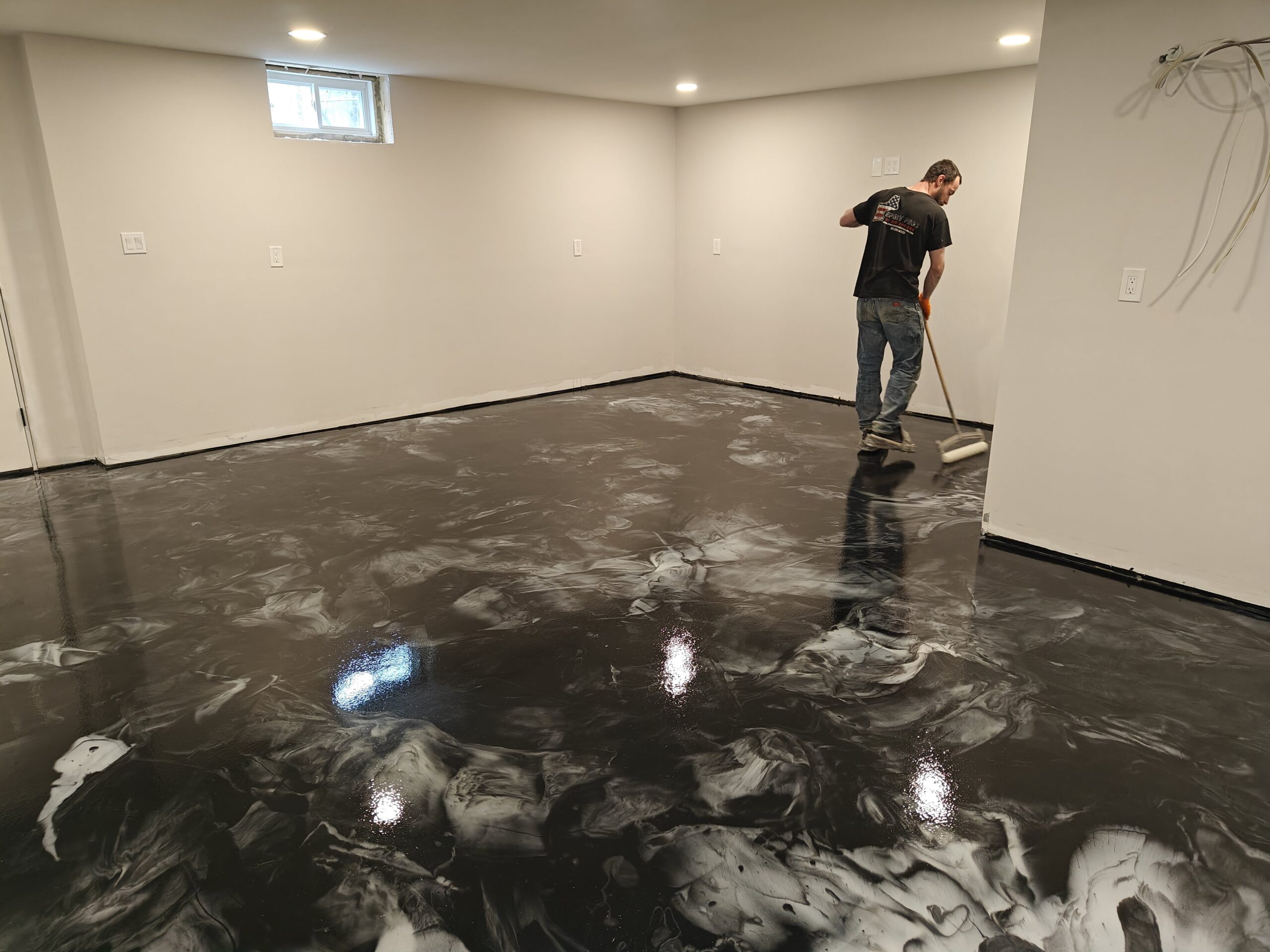
Metallic epoxy flooring
Showrooms, basements, retail and feature spaces where the floor is meant to be looked at.
20–40 mils · poured · no two the same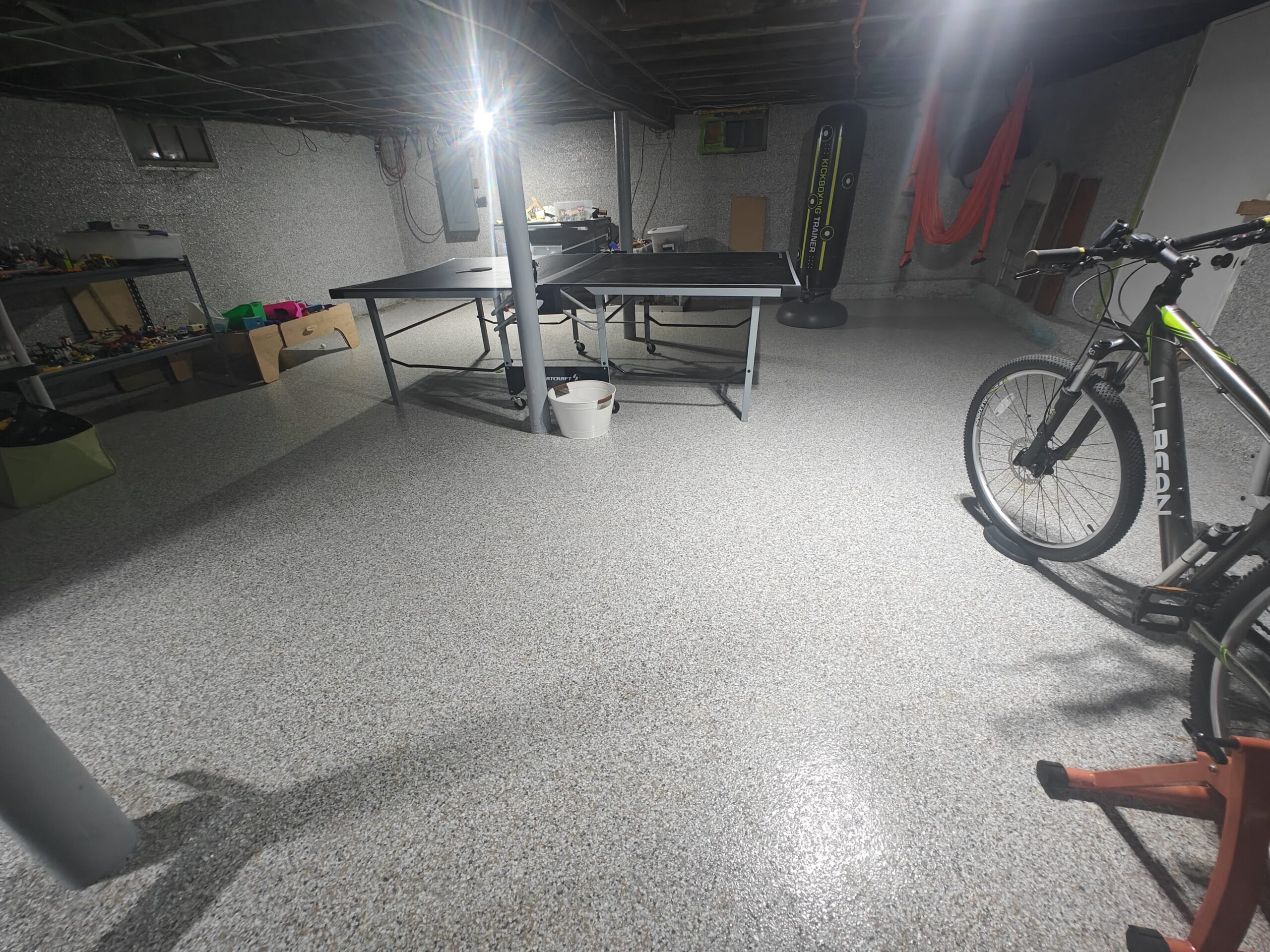
Basement floor coating & sealing
Basement slabs that have to handle vapour drive and coastal humidity without lifting.
Moisture tested first · vapour barrier primer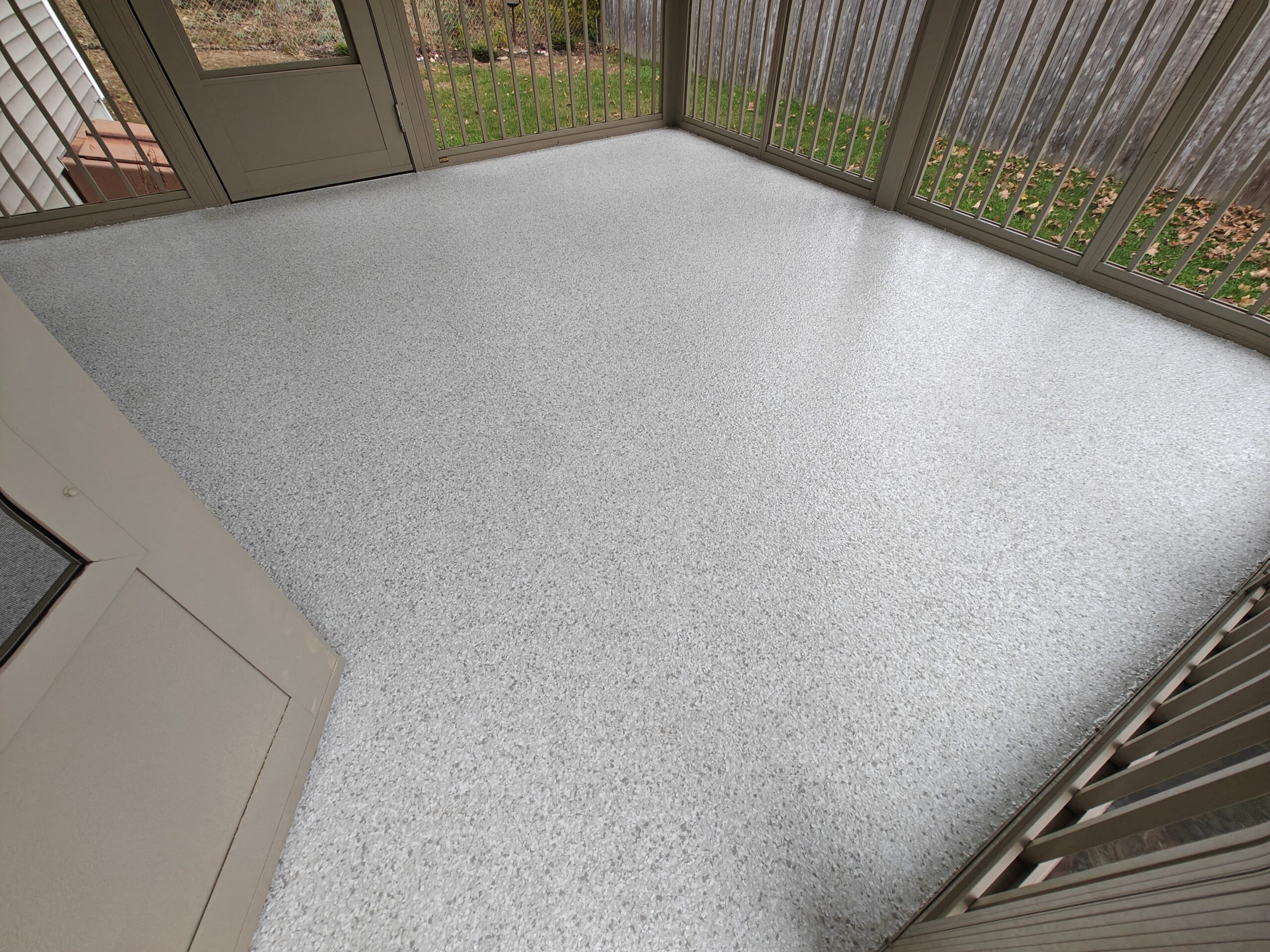
Patio & pool deck coating
Textured, UV-stable coatings for patios, porches and pool surrounds that survive a New England winter.
UV stable · freeze–thaw rated · texturedWorking the slab itself.
Polishing, overlays, staining and repair. Sometimes the finished floor; sometimes what has to happen before a coating is worth laying.
Concrete polishing & grinding
Warehouses, retail and institutional floors where there should be no coating to peel at all.
Densified · gloss levels · low maintenanceSelf-levelling concrete overlays
Uneven, patched or previously repaired slabs that need a flat sound base before anything is coated.
Feather to full depth · flat base · then coatConcrete repair & resurfacing
Spalling, pitting, joint failure and salt damage put right before a coating goes near it.
Crack & joint repair · moisture remediationConcrete staining & sealing
Colour that lasts, indoors and out, on concrete that should not look coated.
Acid or water-based · sealed · UV stable outdoorsThe step everything else depends on.
Nearly every failed floor we are called in to replace failed here. Offered as standalone work as well as part of a system.
Four stages, and you know when you get the space back.
Site assessment
We walk the building, test the slab for moisture and dew point, review chemical exposure and agree the shutdown window. You get a written scope, not a number on a card.
On site, no obligationPreparation
Diamond grinding or shot blasting to profile, crack and joint repair, and HEPA extraction so the rest of the building stays open.
Dust contained · CSP 2–3Installation
Base coat, broadcast and topcoat, phased by bay or zone. Overnight and weekend work where production cannot stop.
Phased by zoneReturn to service
Foot traffic the following morning, vehicles and racking the day after. Cold slabs cure slower and we tell you the real number.
10–14 hrs foot · 24–48 hrs loadRecent commercial installations.
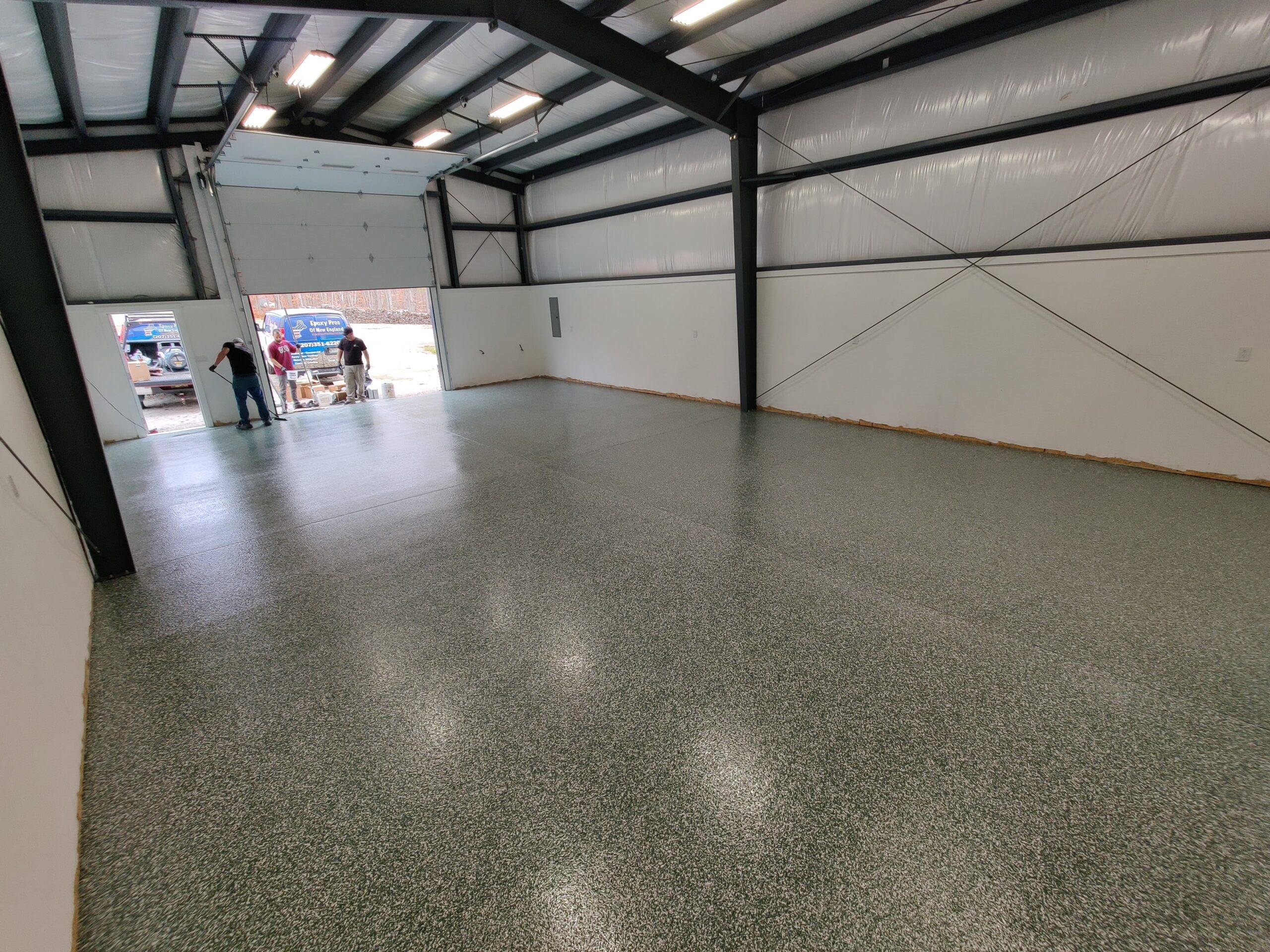
Eagle Flake Shop Floor, Paris, ME
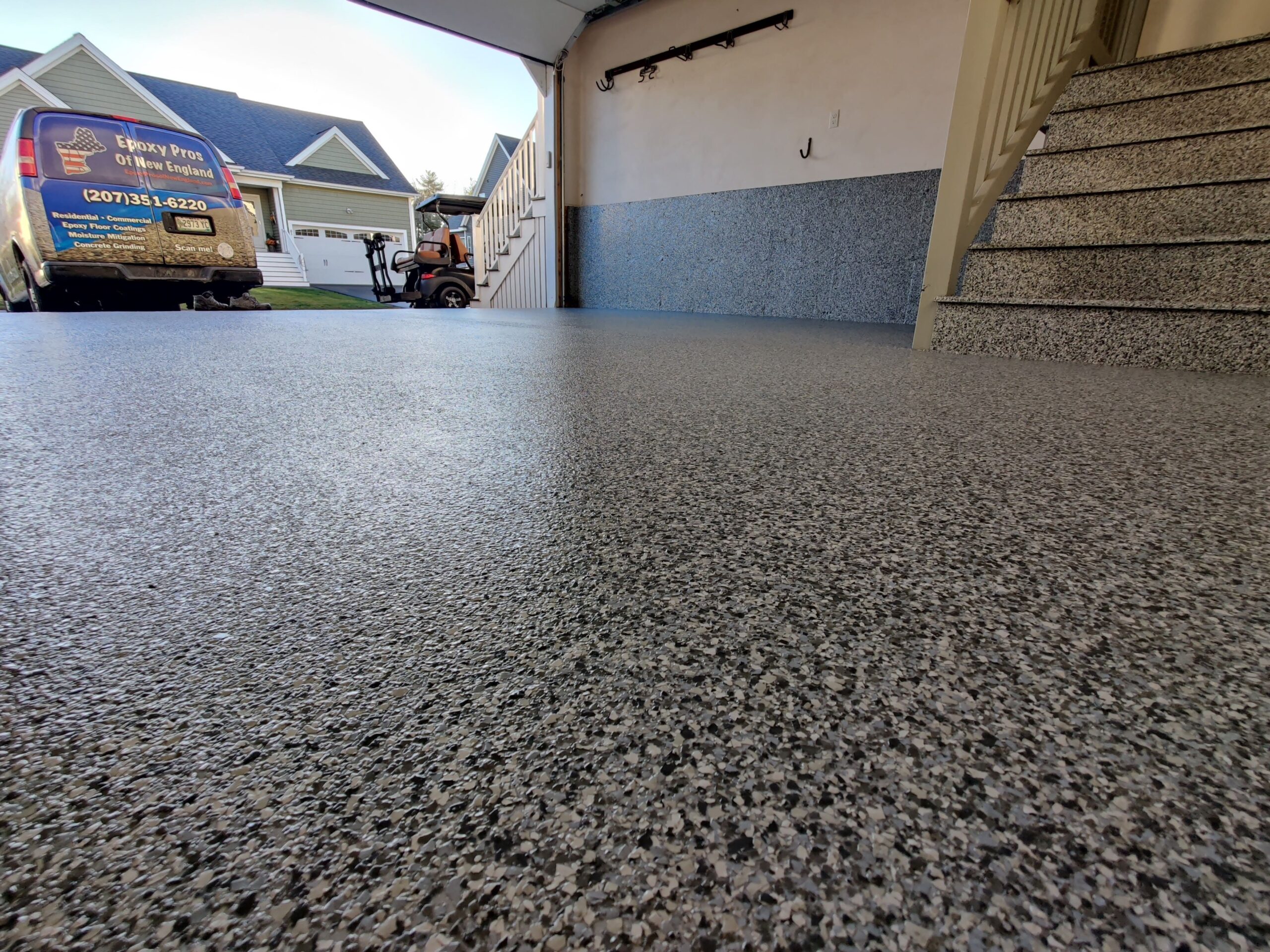
Polar Flake Floor Coating, Wells, ME
Moisture Mitigation Basement Floor, Berwick, ME
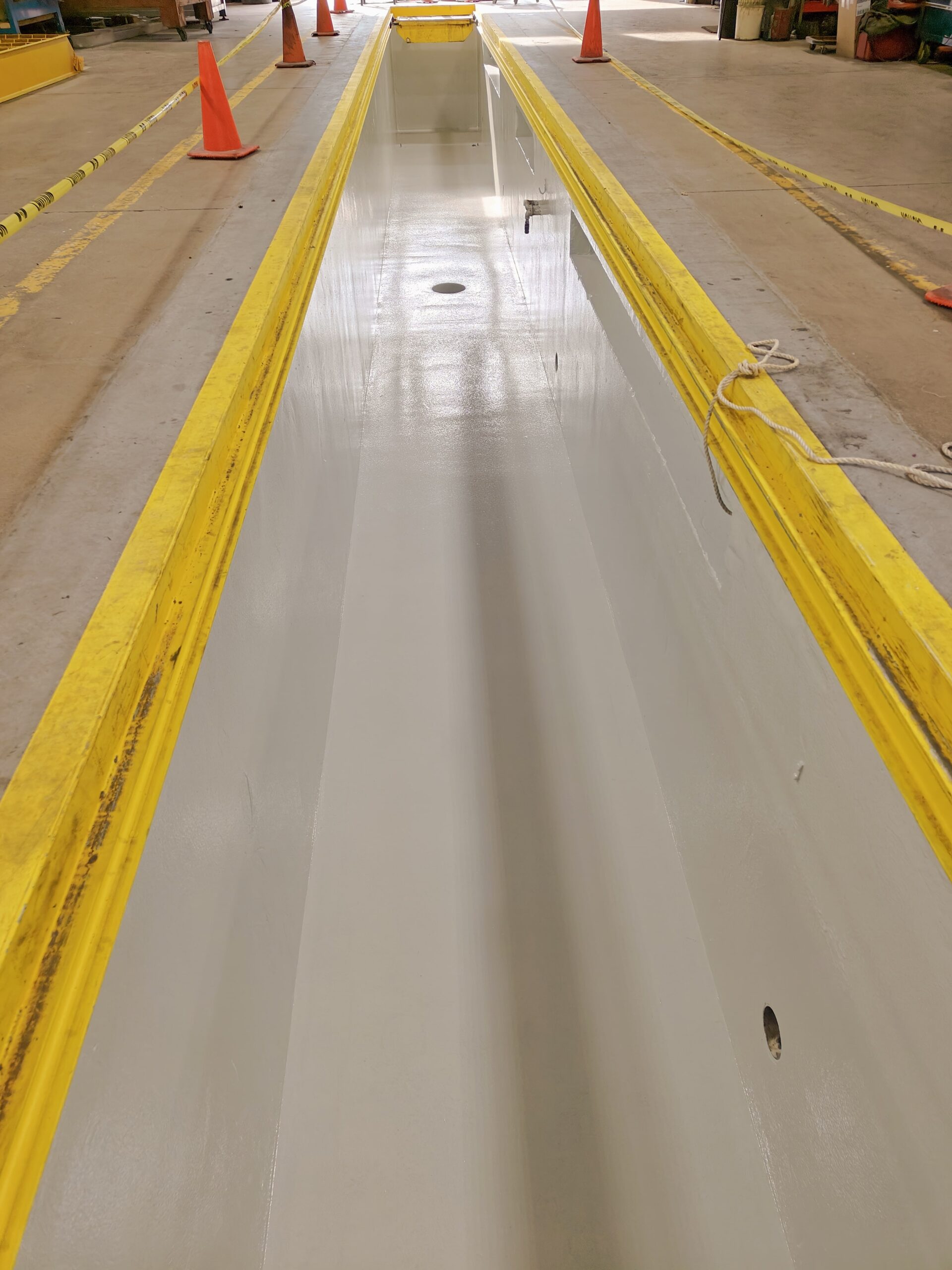
Bus Company Mechanical Pit Coating, Rollinsford, NH
What facility managers ask us first.
How much of my building has to stop?
How quickly can we use the floor again?
Do you work nights, weekends and shutdowns?
Can you install in winter?
The last coating failed. Why would this be different?
What does a site assessment involve?
Book a site assessment.
We walk the building, test the slab, and put a written scope and a realistic shutdown plan in front of you. No obligation, and if the timing or the system is wrong for your space we will say so.