
Upgrading your garage floor can transform how the space looks and functions—but choosing the right system matters, especially in New England’s coastal climate. Homeowners in Portsmouth often ask: Should I install epoxy flooring or garage tiles?
At Epoxy Pros of New England, we help homeowners weigh real-world performance—not just looks. Below is a clear, side-by-side breakdown of epoxy flooring vs garage tiles, with pros and cons tailored to Portsmouth’s weather, salt exposure, and humidity.
Overview: What Are the Two Options?
Epoxy Flooring
Epoxy flooring is a seamless, bonded coating system applied directly to concrete. Most modern installs use epoxy or polyaspartic base coats, decorative flakes (optional), and a clear protective topcoat.
Common uses: Garages, basements, workshops, commercial spaces.
Garage Tiles
Garage tiles are interlocking modular tiles, usually made of PVC or polypropylene, laid over the existing concrete without bonding.
Common uses: Temporary upgrades, DIY projects, light-use garages.
Durability in Portsmouth’s Coastal Climate
Epoxy Flooring — Pros
- Seals concrete against moisture, humidity, and road salt
- Withstands hot tire pickup and heavy vehicles
- Resists oil, chemicals, and abrasion
- Lasts 10–20+ years when professionally installed
Cons
- Requires professional surface prep
- Higher upfront investment
Garage Tiles — Pros
- Quick installation
- Individual tiles can be replaced if damaged
Cons
- Moisture can trap underneath tiles, leading to mold or odor
- Can shift or lift with temperature changes
- Shorter lifespan in coastal, salty environments
Verdict: For Portsmouth’s salt air and wet winters, epoxy flooring is significantly more durable.
Maintenance & Cleaning
Epoxy Flooring
- Sweep and mop—no seams to trap dirt
- Stain-resistant surface
- Does not harbor moisture or debris
Garage Tiles
- Dirt and moisture collect in seams
- Requires periodic lifting and cleaning
- Spills can seep underneath tiles
Winner: Epoxy flooring for low-maintenance living.
Safety & Slip Resistance
Epoxy Flooring
- Optional slip-resistant additives
- Even traction across the entire surface
- Safer when wet or icy
Garage Tiles
- Traction varies by tile type
- Seams can become slick
- Water can pool beneath tiles
Winner: Epoxy flooring—especially important during Portsmouth winters.
Appearance & Design Options
Epoxy Flooring
- Solid colors or decorative flake systems
- High-end, seamless look
- Custom finishes (gloss or satin)
Garage Tiles
- Bold colors and patterns
- Visible seams
- Can look “temporary” over time
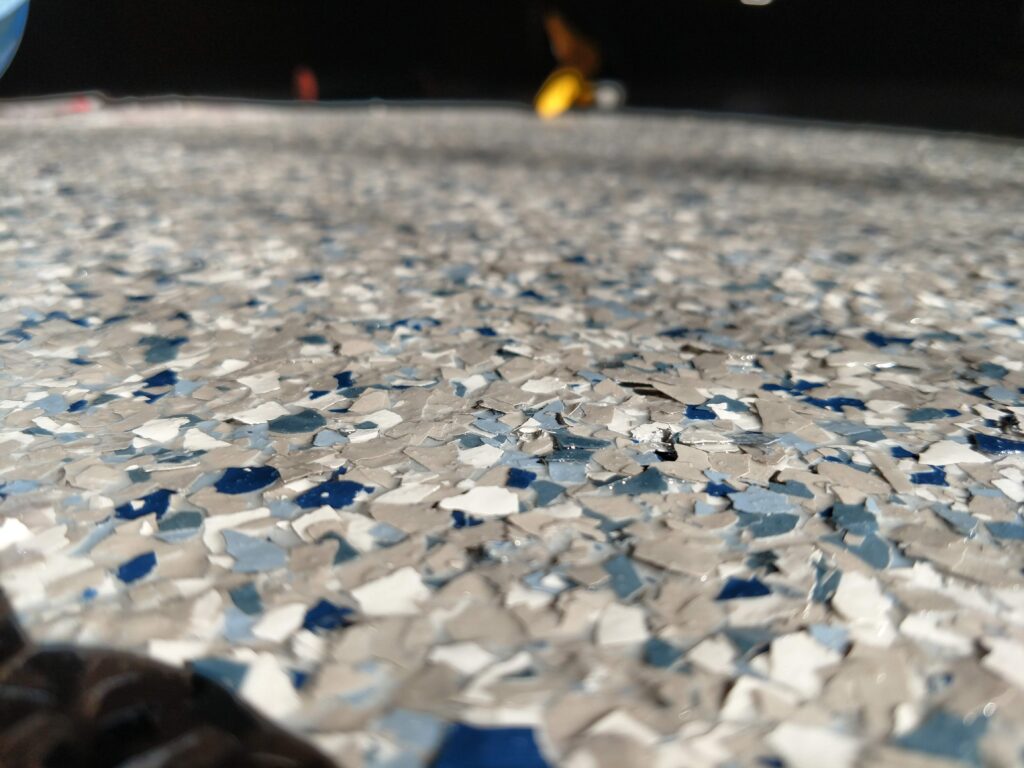
Design Tip: Many Portsmouth homeowners prefer epoxy flake flooring for a clean, upscale appearance that complements coastal homes.
Installation & Downtime
Epoxy Flooring
- Professional installation
- Typically 1–2 days
- Cures into a permanent surface
Garage Tiles
- DIY-friendly
- Install in a few hours
- No curing time
Tradeoff: Tiles win on speed; epoxy wins on permanence and performance.
Long-Term Value
Epoxy Flooring
- Protects the concrete slab
- Improves home appeal and perceived value
- Rarely needs replacement—only occasional topcoat refresh
Garage Tiles
- Lower upfront cost
- More frequent replacement
- No protection for underlying concrete
Winner: Epoxy flooring offers better long-term value for Portsmouth homeowners.
Final Verdict: Which Is Better for Portsmouth, NH?
If you want a long-lasting, moisture-resistant, low-maintenance garage floor that stands up to coastal conditions, epoxy flooring is the superior choice. Garage tiles may work for temporary or light-use spaces, but they struggle with New England humidity and salt exposure.
For most Portsmouth homeowners, epoxy flooring delivers better durability, safety, and long-term value.
Upgrade Your Garage Floor in Portsmouth, NH
If you’re deciding between epoxy flooring and garage tiles, Epoxy Pros of New England can help you choose—and install—the right solution for your home.
👉 Contact us today for a free consultation and expert guidance on the best garage flooring option for Portsmouth, NH.