
When it comes to upgrading your garage floor in Berwick, homeowners often narrow their options down to two choices: garage epoxy flooring or painted concrete. At first glance, both can improve the appearance of a dull gray slab. However, when you look at long-term performance—especially in Maine’s demanding climate—the differences become dramatic.
At Epoxy Pros of New England, we regularly meet homeowners who initially chose garage floor paint because it seemed affordable and simple, only to find themselves dealing with peeling, chipping, and constant maintenance within a few short years. In contrast, professionally installed epoxy garage flooring is engineered for durability, moisture resistance, and longevity.
In this in-depth guide, we’ll compare garage epoxy flooring vs painted concrete across durability, maintenance, cost over time, safety, and overall value—so you can make the best decision for your Berwick home.
Understanding Painted Concrete Garage Floors
Painted concrete is exactly what it sounds like: a layer of latex or oil-based paint rolled onto a concrete slab. Many homeowners choose concrete floor paint because it’s available at hardware stores and can be applied as a weekend DIY project. Initially, it provides a cleaner and brighter look than bare concrete.
However, paint is not designed to bond deeply with concrete. It sits on the surface rather than penetrating or chemically bonding. In Berwick, where garages experience freeze–thaw cycles, moisture intrusion, road salt, and temperature swings, painted concrete often begins to fail quickly. Tire friction, snow melt, and heavy storage items cause paint to chip and peel, exposing bare concrete beneath.
Paint may improve aesthetics temporarily, but it offers minimal protection and limited durability under real-world garage conditions.
What Is Garage Epoxy Flooring?
Garage epoxy flooring is a multi-layer coating system that chemically bonds to the concrete surface. It begins with mechanical surface preparation, usually diamond grinding, which opens the pores of the concrete and ensures proper adhesion. A high-solids epoxy base coat is applied, often followed by decorative vinyl flakes, and sealed with a protective topcoat.
Unlike paint, epoxy becomes part of the concrete surface. The result is a seamless, non-porous, highly durable garage floor that resists moisture, chemicals, abrasion, and impact. In a town like Berwick, ME, where garages frequently face snow, ice melt, and road salt, epoxy garage flooring offers serious performance advantages.
Durability: The Biggest Difference
Durability is where garage epoxy flooring clearly outperforms painted concrete. Concrete paint typically begins showing signs of wear within one to three years. Peeling under hot tires is one of the most common complaints. As vehicles pull into a warm garage after winter driving, the heat softens the paint and lifts it from the surface.
Epoxy garage flooring, on the other hand, is designed to withstand hot tire pickup. When properly installed, it forms a thick, bonded layer that resists lifting, chipping, and cracking. A professionally installed epoxy floor in Berwick can last ten to twenty years or more with minimal maintenance.
In terms of impact resistance, epoxy also wins. Dropped tools, heavy shelving, and equipment are far less likely to damage epoxy than painted concrete. Over the long term, epoxy provides significantly greater structural protection for the underlying slab.
Moisture and Salt Resistance in Maine’s Climate
Berwick homeowners deal with serious winter conditions. Snow, slush, and road salt are tracked into garages daily during colder months. Painted concrete absorbs moisture through micro-cracks and porous areas, leading to bubbling and peeling.
Epoxy flooring seals the concrete entirely. Its non-porous surface prevents water and salt from penetrating the slab. This not only protects the appearance of the floor but also extends the life of the concrete itself. Moisture mitigation is critical in Southern Maine, and epoxy is specifically engineered for this purpose.
Over time, painted floors often develop flaking and scaling due to salt exposure. Epoxy floors maintain integrity, resisting chemical damage far better than basic paint.
Maintenance Requirements Over Time
Maintenance is another area where epoxy garage flooring stands out. Painted concrete requires frequent touch-ups. Once peeling begins, homeowners often repaint sections annually or every few years. Each repainting process requires cleaning, sanding, and reapplication, which consumes both time and money.
Epoxy garage floors require far less upkeep. Regular sweeping and occasional mopping with mild cleaner are typically all that’s needed. The seamless surface prevents dust formation, unlike painted concrete which can still allow dusting from the slab.
Over a ten-year span, the maintenance burden of painted concrete can far exceed that of epoxy flooring, both financially and in terms of effort.
Appearance and Aesthetic Longevity
While both options can initially look clean and appealing, epoxy flooring maintains its appearance much longer. Concrete paint often fades, scuffs, and develops uneven wear patterns. In high-traffic areas, the paint may thin or discolor.
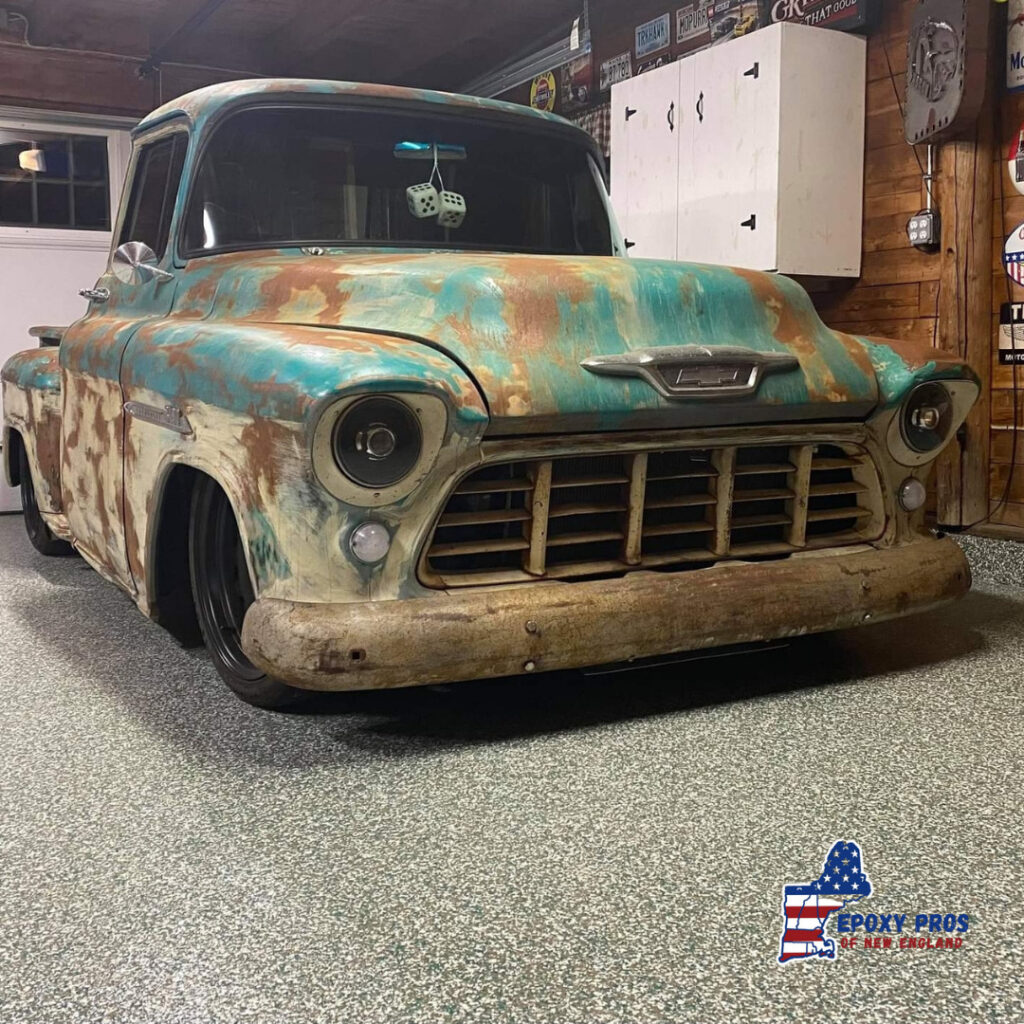
Epoxy garage flooring, especially decorative flake systems, hides minor dirt and imperfections while maintaining consistent color and texture. The finish can be glossy or satin, depending on preference, and remains uniform for years.
For homeowners concerned with curb appeal or resale value, epoxy offers a more professional, high-end appearance that holds up over time.
Safety and Slip Resistance
Garage safety is often overlooked. Painted concrete can become slippery when wet, particularly in winter when melted snow accumulates. Most standard concrete paints lack built-in slip resistance.
Epoxy garage flooring systems can include textured additives or decorative flake systems that improve traction. This added slip resistance makes epoxy safer for families, especially in Berwick’s icy winter conditions.
Over time, painted floors may become slick as they wear down. Epoxy maintains better traction and surface consistency.
Cost Comparison: Short-Term vs Long-Term
Initially, painted concrete appears cheaper. A DIY paint kit may cost a few hundred dollars. However, when factoring in frequent repainting, repairs, and surface preparation, costs accumulate.
Professional epoxy garage flooring requires a higher upfront investment. Yet its lifespan—often fifteen years or more—means the cost per year of service is significantly lower. Instead of repainting multiple times over a decade, homeowners invest once and enjoy long-term performance.
When evaluating garage flooring cost in Berwick, ME, it’s essential to consider total ownership cost rather than initial expense alone.
Concrete Protection and Structural Preservation
Beyond surface appearance, epoxy flooring protects the underlying concrete slab. Painted concrete offers minimal protection against chemical spills, oil stains, and moisture intrusion.
Epoxy seals the slab entirely, preventing oil penetration and reducing freeze–thaw damage. Over time, this protection can prevent costly structural repairs. In Maine’s variable climate, preserving the integrity of your garage slab is a smart long-term decision.
Environmental and Chemical Resistance
Garages frequently experience exposure to automotive fluids, gasoline, cleaning chemicals, and road treatments. Concrete paint offers limited resistance to these substances. Stains may seep through, and chemical reactions can weaken the coating.
Epoxy flooring is engineered for chemical resistance. Spills remain on the surface and can be wiped away without penetrating. For Berwick homeowners who use their garage as a workshop or storage space, this added resistance provides peace of mind.
Long-Term Value for Berwick Homeowners
When evaluating garage epoxy flooring vs painted concrete, the long-term performance difference is substantial. Paint may serve as a short-term cosmetic upgrade, but it cannot match epoxy’s durability, moisture resistance, safety, and lifespan.
For homeowners planning to stay in their homes for years, epoxy garage flooring offers better value. It reduces maintenance, protects the concrete slab, and enhances overall property appeal. Even for those considering resale, a professionally installed epoxy floor signals quality and care to potential buyers.
Final Verdict: Which Should You Choose?
If you’re seeking a temporary, budget-friendly refresh, painted concrete may seem attractive. However, if you want long-lasting durability, protection from Maine’s climate, and a garage floor that maintains its appearance for years, epoxy garage flooring is the superior solution.
In Berwick, ME, where moisture, salt, and seasonal changes challenge garage surfaces, epoxy flooring consistently outperforms paint in every long-term category.
Upgrade Your Garage Floor in Berwick, ME
If you’re considering garage epoxy flooring and want expert guidance, Epoxy Pros of New England specializes in high-performance epoxy garage floors designed for Maine conditions.
Contact us today for a FREE consultation and discover how epoxy flooring can transform your garage with durability, safety, and long-term value built to last.